


Poker players have a built-in advantage when they come face-to-face with casino bonuses. With mindsets primed to view bonuses in the same light as optional EV boosters, they can naturally assess them through the lens of volatility, risk-to-reward trade-offs, and knowing when to commit or fold. Playing poker requires people to avoid emotional traps and look at the situation logically, and the more players lean into that mindset, the more they can see bonuses as opportunities instead of obligations.
In this article, we’ll go over how you can approach casino bonus strategy with a poker-first perspective. We’ll look at how to evaluate expected value (EV), compare terms, weigh volatility against wagering requirements, and make informed decisions that preserve your core play.
Applying the Poker Mindset to Casino Bonuses
Not every opportunity at the table calls for putting your bankroll on the line, and that logic applies to bonuses too.
Knowing What to Chase
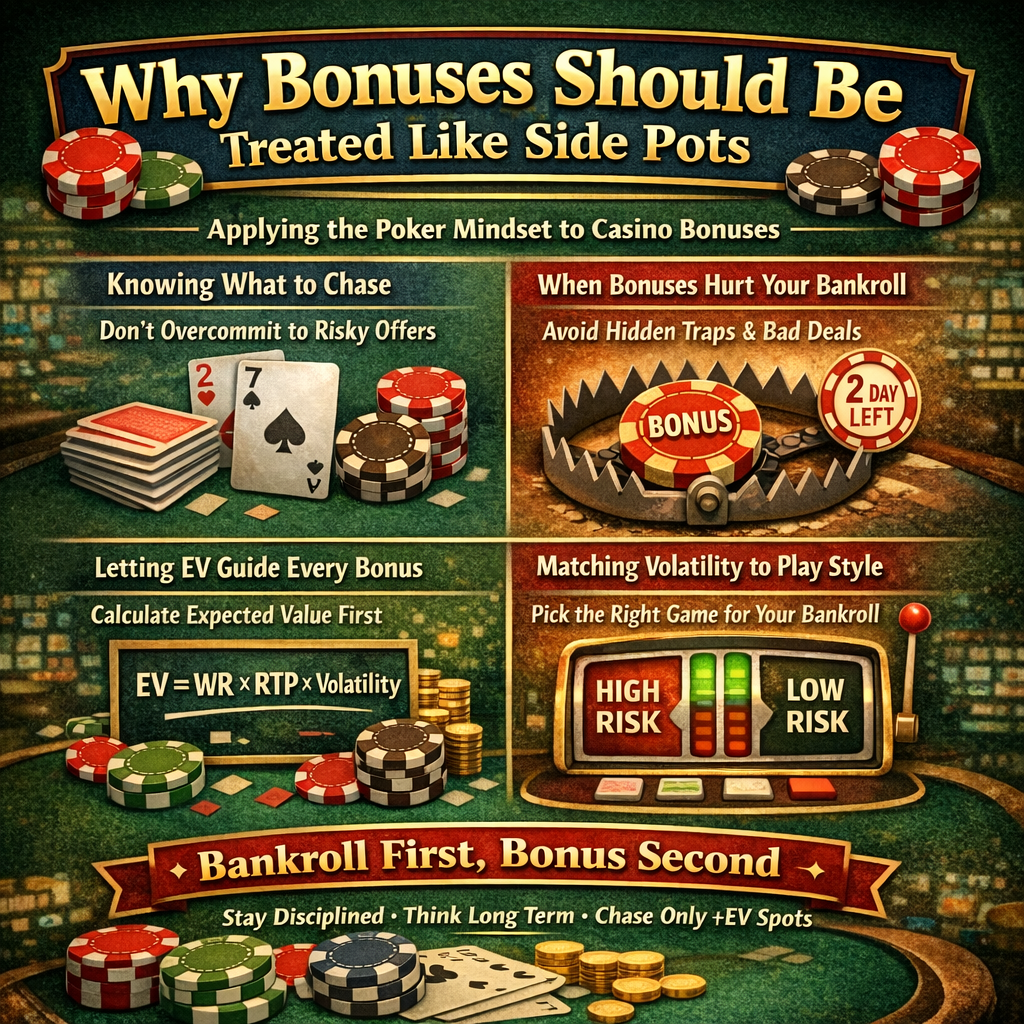
Experienced poker players know that committing chips without a clear edge is one of the gravest mistakes you can make. Amateurs might take a risk on a marginal hand, but more seasoned players simply fold rather than chase a small, unlikely, gain. When you repeatedly overcommit in low-expected-value spots, you put your main stack in constant jeopardy.
Bonuses follow the same principle in that they should never force you to play games outside your bankroll limits or comfort zone. Otherwise, there’s not really any upside. Discipline comes from realizing that not all bonuses (like extra chips) are worth the risk, and it’s much better to find play that aligns with a solid risk-to-reward ratio.
When Bonuses Hurt Your Bankroll
Promises of a “bonus” can also end up turning potential value into nothing more than a hidden leak. Some bonuses come with short expiration periods and high wagering requirements, which turn them into liabilities. Even if a bonus looks enticing on paper, it might be a trap in disguise. That’s why it’s so important to be able to distinguish between a value add using logical research and chasing a bonus blindly based on impulse.
Letting EV Guide Every Bonus
Headline numbers and fun wordplay can hook just about anyone in, but smart players quickly learn that these flashy promises don’t always give you the full picture. The best way to evaluate a bonus is by considering the expected value. That way, you get to see a true measure of its potential. A simple framework you can use is EV = wagering requirement x game weighting x RTP x volatility x bankroll impact.
Why Poker Pros See Bonus Value First
As mentioned, poker players are already primed to think based on long-term expectations, variance, and a scenario-based framework. They’re constantly reminding themselves that bankroll discipline is number one and that high-variance plays are inherently risky. Using the same discipline they apply during the game, they can instinctively filter out the offers that look attractive but ultimately come with negative expected value. The reality is that bonuses aren’t all bad—it’s just that you have to sift through many to find the right ones to commit to.
How Bonus Selection Mirrors Hand Selection
Professional poker players might put together a range of starting or memorable hands they can see themselves making, and in the same vein, you can select a range of acceptable bonuses. Your criteria might feature realistic clearing timelines, manageable wagering requirements, and other parameters you can use as a line of defense. Because bonuses use psychological tactics, these standards help you avoid falling for non-genuine offers.
Analyzing Bonuses Before You Commit
Yet the process of bonus selection isn’t always a case of picking one that looks great at the outset.
Avoiding Emotional Play with Verified Data
Decision-making forms the foundation of poker, relying on structured and clear information to identify profitable plays. Bonus evaluation is equally a must, with the evaluation process treated as a gradual and intentional exercise. When you pit offers against each other and across platforms, you can stop relying on guesswork and gut feeling to separate additive opportunities from mere scams.
A good place to start is with third-party listings, such as IndiaCasino’s breakdown of online casino sites. They provide a structured bonus wagering analysis that redirects your focus to the main objective: committing to +EV opportunities.
Evaluating Terms Through Side-by-Side Analysis
Side-by-side comparisons are so valuable because they immediately expose pitfalls. You’re able to realize that alternatives don’t have the drawbacks that the first bonuses you set your eyes on do. Visualization lets you prioritize the right offers and avoid marginal or even negative-value situations. In turn, you get to protect your cash flow and stay disciplined, keeping all distractions at bay.
Matching Volatility to Your Play Style
A rule of thumb to follow is to match volatility to your available bankroll and the bonus structure. Each session should then contribute to clearing without unnecessary worry. It’s basically a case of selecting the right tool for the job, as not all games clear bonuses the same way.
Turning Variance into Opportunity
High-volatility games can accelerate bonus clearing, but this depends heavily on having the right conditions. When wagering requirements are manageable, a high RTP rate is in place, and expiration periods are flexible, the potential for fast-tracked expected returns naturally offsets the extra swings. On the other end of the spectrum, low-variance options offer steadier results that let you slowly work toward fulfilling the wagering requirement. Both approaches have value in different circumstances. If the math justifies the extra risk and you have the cushion to absorb potential swings, then it’s acceptable to commit.
Minimize Variance with Smart Clearing
At the end of the day, high volatility is exactly what it says it is—unpredictability baked into every hand or spin, meaning the results can swing wildly in one direction or the other. Especially if you have a small bankroll or are prone to emotional tilt, it’s better to adopt a slow-and-steady approach. Low-variance games that boast consistent RTP have the benefits of posing minimal risk to the stack and gradual progress. Like a disciplined poker session, you can focus on EV-positive decisions rather than quick but risky gains.
Let Your Strategy Lead
Bonuses are the broader casino world’s poker side pots. Sure, they’re nice when they land, but they’re ultimately never worth throwing your whole setup off balance. They sit outside the circle of your core rules because chasing marginal rewards is and should be optional.
Discipline Over Impulse
Impulsiveness doesn’t always manifest as rage or outward emotion. In many cases, it’s the quiet urge to push past your own rules because the bonus feels too close to give up. At that point, sunk-cost fallacy starts rearing its ugly head, and players end up extending sessions or over-betting to salvage a reward. That’s exactly how companies get you. When you let the bonus dictate your play, you ditch decision-making based on EV and react based on emotion.
Long-Term Thinking Protects Your Bankroll
Pros very rarely bank on spikes of luck to grow their bankrolls and their reputations. Becoming an expert gambler is all about steady, repeatable decisions that create long-term value. Bonuses can amplify those returns if they’re treated as supplemental—and as long as your decision-making stays anchored and grounded in the long-term edge.
Chase Only When EV Justifies Risk
At times, bonuses are worth the extra effort. But how do you know? When high-RTP options align with your playstyle, wagering requirements are truly clearable, and the expiry window leaves room for thoughtful consideration. When all these pieces fall into place, it’s okay to push a little harder and let strategic aggression take over. In these cases, the bonus adds to an already solid plan instead of pulling you away from it. If you’re able to mathematically justify your decision, then by all means go for it.
Bankroll First, Bonus Second
At a poker table, the players who stay in the game consistently protect their main stack and only enter side pots when the value is staring them down. Bonuses are much the same, as they can give you a boost if you use them with discipline or drain your bankroll if you chase them recklessly. Employ a poker mindset in casino play, though, and you’ll be more likely to ground yourself in long-term thinking that brings you back to the core of your strategy.

