

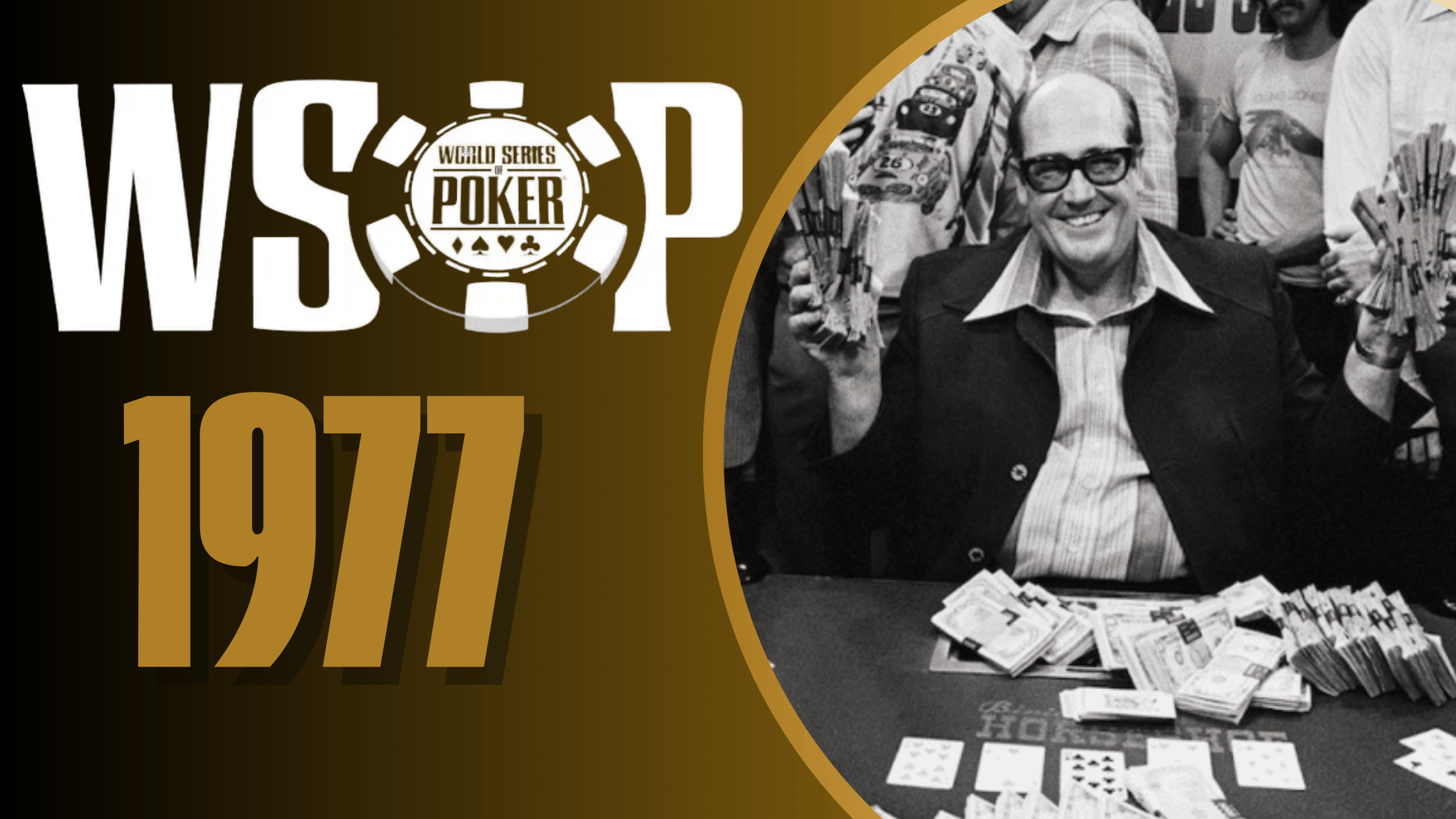
The Rise of “The Owl” and Record-Setting Feats
1977 wasn't just about the battle for gold bracelets; it was also about the race for the title of the youngest champion. Early on, the series spotlighted a name that would resonate in poker for decades. Bobby Baldwin, nicknamed “The Owl”, managed to win two consecutive events in just two days. First, he defeated the legendary Billy Baxter in the $10,000 2-7 Draw and then dominated the $5,000 Seven-Card Stud. At just 27 years old, Baldwin became the youngest bracelet holder in history, although his record stood for only eight days.
The excitement continued when Jeff Sandow won the $500 Limit Seven Card Stud event at the incredible age of 23. It was clear proof that poker was attracting a new generation of driven players who weren’t afraid to challenge seasoned veterans.
Sandow's record lasted for decades until Daniel Negreanu matched it with his first victory in 1998.
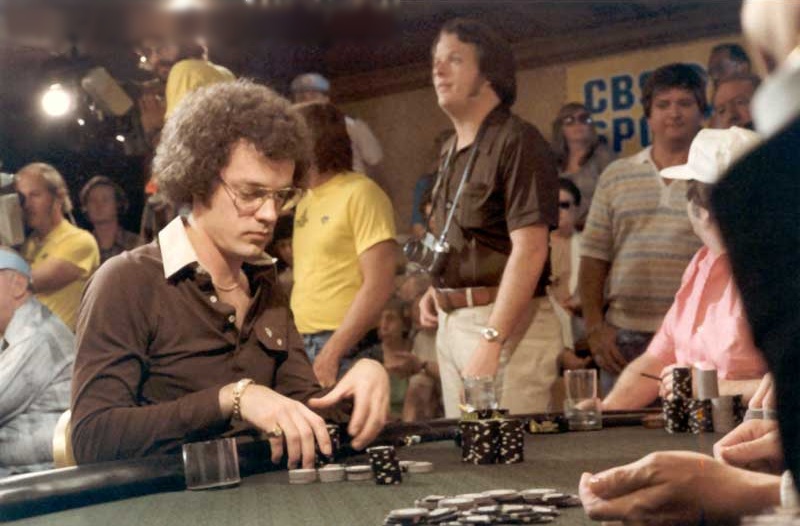
A Historic Moment as Women Conquer the Horseshoe
One of the most fascinating stories of 1977 was the bold experiment by tournament director Eric Drache. He decided to introduce the first-ever ladies-only event, the $100 Ladies Seven Card Stud. Organizers hoped for decent participation, but the reality blew them away. A record 93 women sat at the tables, setting an absolute record for the number of participants in a single WSOP event at the time.
The first-ever champion was Jackie McDaniel, who took home the winning bracelet and a prize of $5,580. This moment forever changed the unwritten rules, and poker ceased to be an exclusively male domain.
|
Tournament |
Entries |
Winner |
Prize |
|
Event #1: $500 Limit A-5 Draw Lowball |
36 |
Billy Allen |
$10,800 |
|
Event #2: $10,000 No-Limit 2-7 Draw Lowball |
11 |
Bobby Baldwin |
$80,000 |
|
Event #3: $5,000 Limit Seven Card Stud (Rebuy) |
11 |
Bobby Baldwin |
$44,000 |
|
Event #4: $500 Limit Razz |
21 |
Gary Berland |
$6,300 |
|
Event #5: $10,000 Limit Seven Card Stud Hi-Lo |
7 |
Doyle Brunson |
$52,500 |
|
Event #6: $5,000 Limit Ace-to-Five Draw |
2 |
Perry Green |
$10,000 |
|
Event #7: $1,000 No-Limit Hold'em |
55 |
George Huber |
$33,000 |
|
Event #8: $1,500 No-Limit Hold'em |
38 |
Louis Hunsaker |
$34,200 |
|
Event #9: $100 Ladies Seven Card Stud |
93 |
Jackie McDaniel |
$5,580 |
|
Event #10: $1,000 Limit Seven Card Stud Hi-Lo |
18 |
Fats Morgan |
$10,800 |
|
Event #11: $500 Limit Seven Card Stud |
38 |
Jeff Sandow |
$11,400 |
|
Event #12: $5,000 Limit Razz |
5 |
Richard Schwartz |
$25,000 |
|
Event #13: $10,000 Main Event (NLH) |
34 |
Doyle Brunson |
$340,000 |
The Quest for a Title Defense
When the Main Event kicked off, all eyes were on Doyle Brunson. The reigning champion was the crowd favorite and a clear favorite among bettors. Successfully defending the title had only been achieved by Johnny Moss during the early days of WSOP with far less competition. The 1977 Main Event, with a $10,000 buy-in, saw a record 34 players enter, creating a prize pool of $340,000. It was a jaw-dropping sum at the time and only one player could walk away with it.
Brunson’s journey was no easy feat, but the crucial moment came on the third day of play. True to his aggressive style, Doyle wasn't afraid to play suited connectors, a rarity then. In a massive pot, he knocked out both Buck Buchanan and Ed Whited after hitting trips sevens, paving his way to the finals.
Sailor Roberts, who dominated the Main Event in 1975 and was part of the legendary Texas trio alongside Doyle and Amarillo Slim, also made it to the final table. Yet, the showdown between two friends never took place, leading instead to an epic heads-up of two generations.
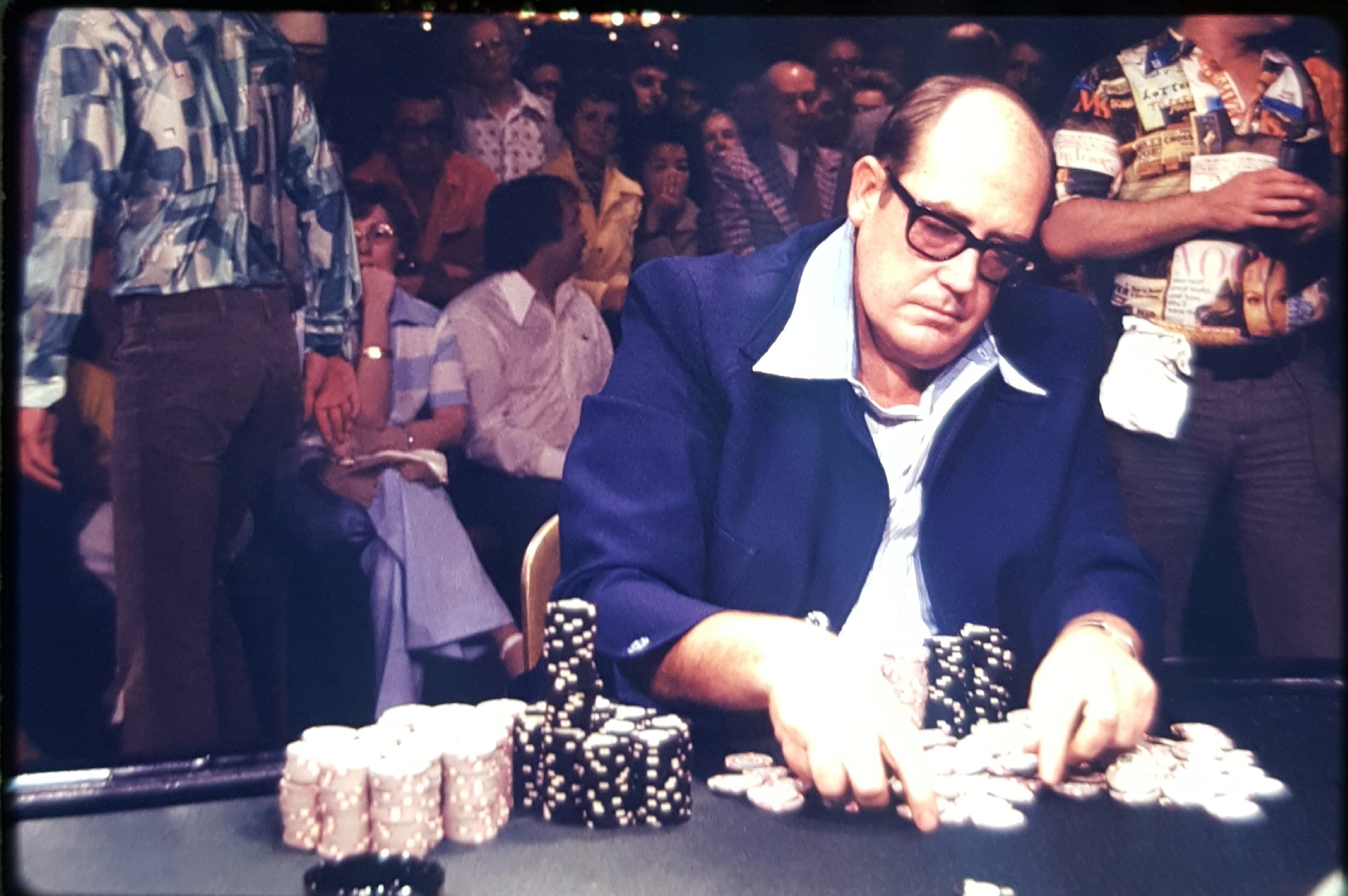
Facing the seasoned legend was Gary “Bones” Berland, a fascinating young man who had left college for poker, splitting his time in Las Vegas as both a dealer and a player. Berland had already claimed his first bracelet by winning the $500 Limit Razz at the start of the event. His brilliant form carried into the Main Event, where he entered heads-up as the chipleader. Yet Brunson kept his composure, doubled his stack at a crucial moment, and seized the initiative.
The Legendary 10-2 Hand
Then came the hand that even novice poker players know today. Doyle Brunson held T s 2 h while Gary Berland had 8 h 5 c. The dealer laid out the flop T c 8 d 5 h. Berland hit two pairs and Brunson had top pair. At that moment, Berland had a great chance to shift the chip count in his favor. Paradoxically, both players checked, with Berland passively waiting, and Brunson wisely avoiding risk.
The turn brought 2 d. A seemingly insignificant card that, in fact, turned everything upside down. Brunson had two better pairs and a chance to end the tournament. When Doyle bet, Berland, feeling he held the winning hand, immediately declared all-in. Brunson called without hesitation.
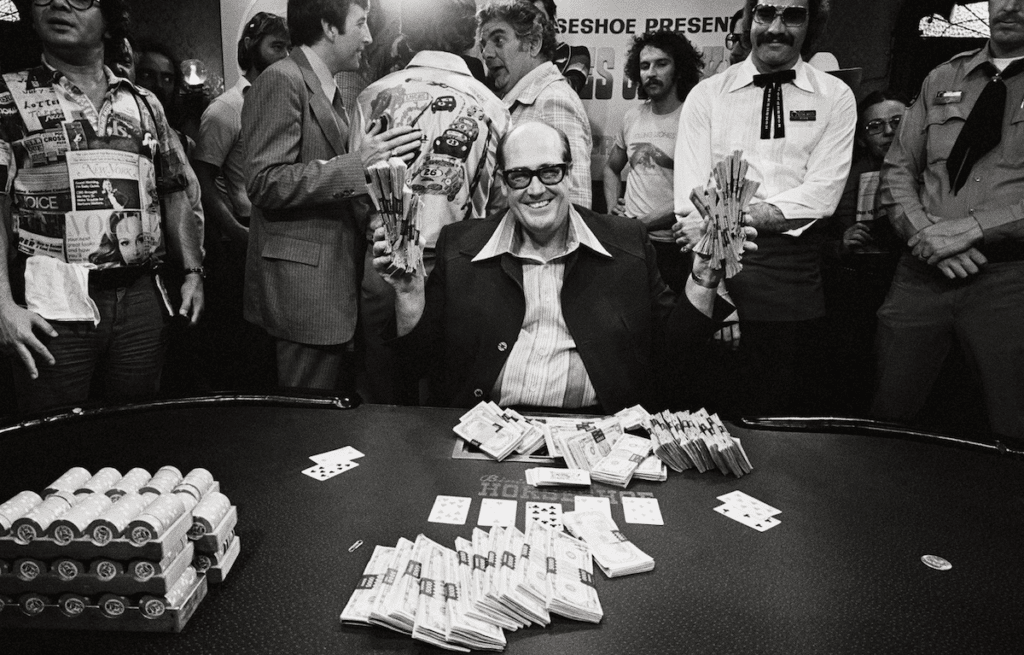
You could hear a pin drop in the room at that moment. Gary Berland needed an eight or a five on the river to survive. However, the dealer placed a T h on the table instead. The Horseshoe erupted in excitement. Doyle Brunson completed a full house and won the world championship title for the second time in a row with the exact same hand. The 10-2 combo was forever christened as “Texas Dolly”.
A Legacy That Lives On
Gary Berland was processing the moment hours after the tournament. Although he was a brilliant mathematician and earned five bracelets during his tragically short career, the world champion title eluded him. The fact that he died only ten years later from a rare blood disease at 37 didn’t give him more time to become one of the absolute legends.
Doyle Brunson, on the other hand, used his $340,000 win in a visionary way. He invested some of the money into publishing a book we now know as “Super System”. Originally titled “How I Made Over $1,000,000 Playing Poker”, the book became the bible of poker strategy, transforming poker from a game of chance into a science.
1977 wasn’t just about two random cards. It was a year when poker gained its first modern textbook, its first female heroes, and a legend that defied the laws of probability.
More from WSOP History
The History of WSOP: 1976 – Texas Dolly's First Triumph and the Birth of the Legendary Hand 10-2
The History of WSOP: 1974 – Johnny Moss's Return to the Throne and the Birth of Iconic Bracelets
The History of WSOP: 1973 – Puggy Pearson's Triumph and the Dawn of the Television Era
The History of WSOP: 1972 – Amarillo Slim's Controversial Win
The History of WSOP: 1971 – The First Freezeout Tournaments
The History of WSOP: 1970 - The First World Champion Elected by Vote
Sources: WSOP, Wikipedia, GGpoker, PokerListings

