

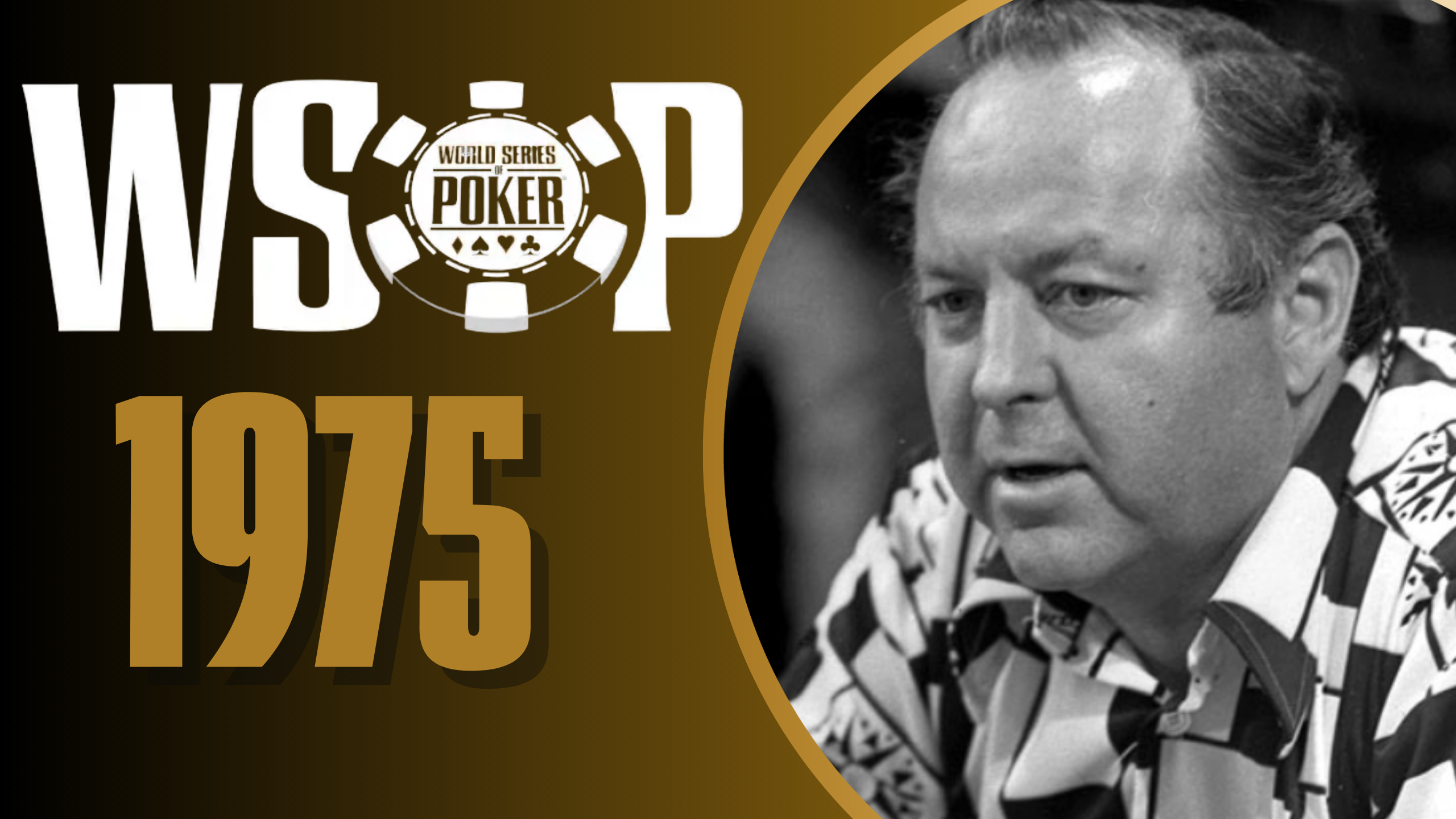
The Birth of the Golden Bracelet Tradition
Although Johnny Moss received the first gold bracelet in history after winning the Main Event in 1974, it wasn't until 1975 that it was established as the permanent and sole trophy for all event winners, replacing silver cups or plates. From that moment, the bracelet became the "holy grail" for every player, a tradition that has endured for over 50 years.
Organizers made a strategic decision this year. They reduced the number of preliminary tournaments to four, and the buy-ins for side events also dropped compared to previous years. The goal was for players to focus entirely on the Main Event and attempt to break previous participation records.
|
Tournament |
Entries |
Winner |
Prize |
|
Event #1: $1K Limit Seven-Card Stud |
44 |
Johnny Moss |
$44,000 |
|
Event #2: $1K Limit Razz |
17 |
Sam Angel |
$17,000 |
|
Event #3: $5K No-Limit 2-7 Draw Lowball |
7 |
Billy Baxter |
$35,000 |
|
Event #4: $1K No-Limit Hold'em |
32 |
Jay Heimowitz |
$32,000 |
|
Event #5: $10K Main Event (NLH) |
21 |
Sailor Roberts |
$210,000 |
Dominance of Veterans and New Faces
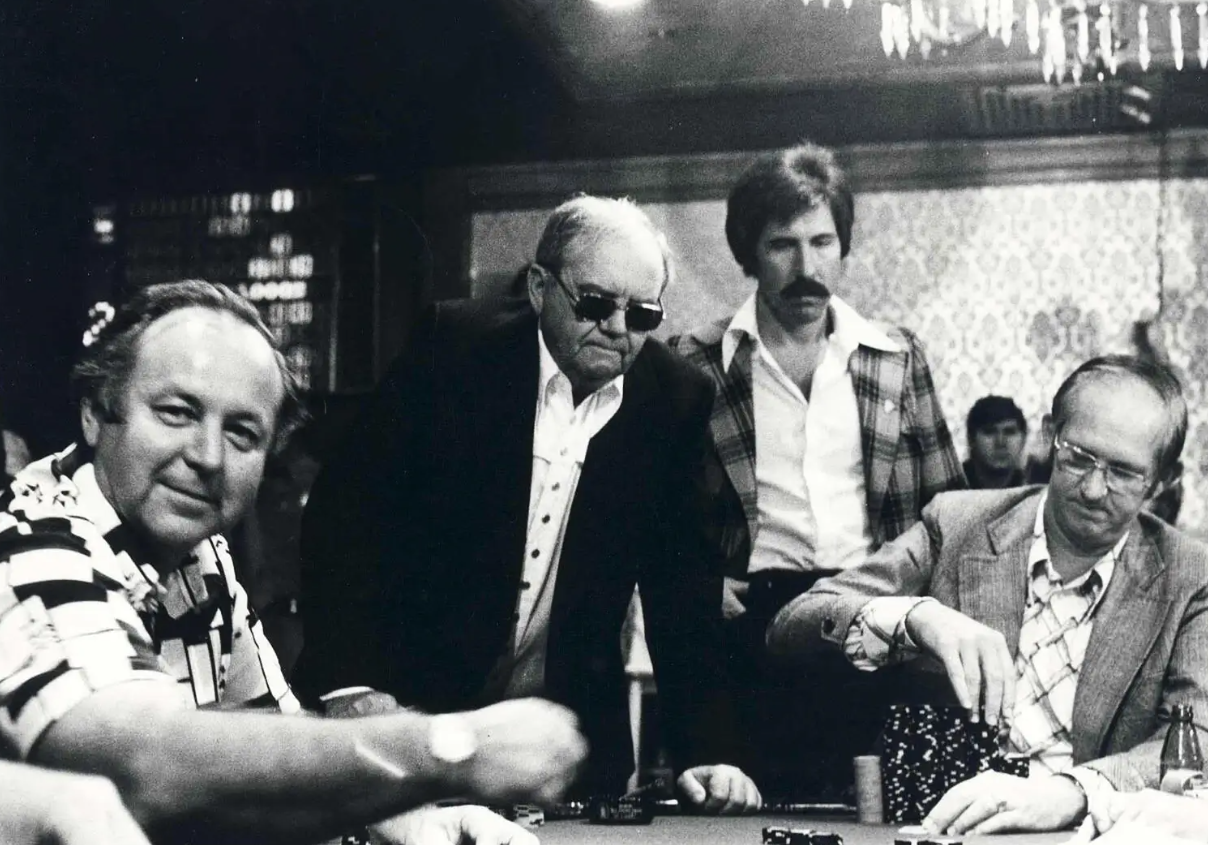
The initial tournament demonstrated that the "old guard" still had something to say. Reigning champion Johnny Moss left no doubts about his skills, starting just as he finished the previous year. In the first event, $1,000 Seven-Card Stud, he prevailed over 44 participants, taking home $44,000. It was his fifth gold bracelet, further cementing his dominance atop the winner's leaderboard.
The second tournament was won by Sam Angel, a Razz victor with one of the most intriguing life stories. He entered the world of high-stakes poker by working as a personal driver for the legendary Nick "The Greek" Dandolos. To build his bankroll, he sold jewelry and eventually became a Razz specialist. It was in this discipline that he won both his bracelets, having also triumphed in the same event at WSOP 1973.
In the third tournament, 34-year-old Billy Baxter shone, becoming the youngest bracelet winner in WSOP history at that time. Baxter was a gambler from the age of fourteen, starting as a pool player. The 1975 title was the first of his future seven bracelets. Baxter was known not only for his excellent results but also for winning a court case against the IRS, leading to poker winnings in the US being taxed at a lower rate. Thousands of players can still thank him for that today.
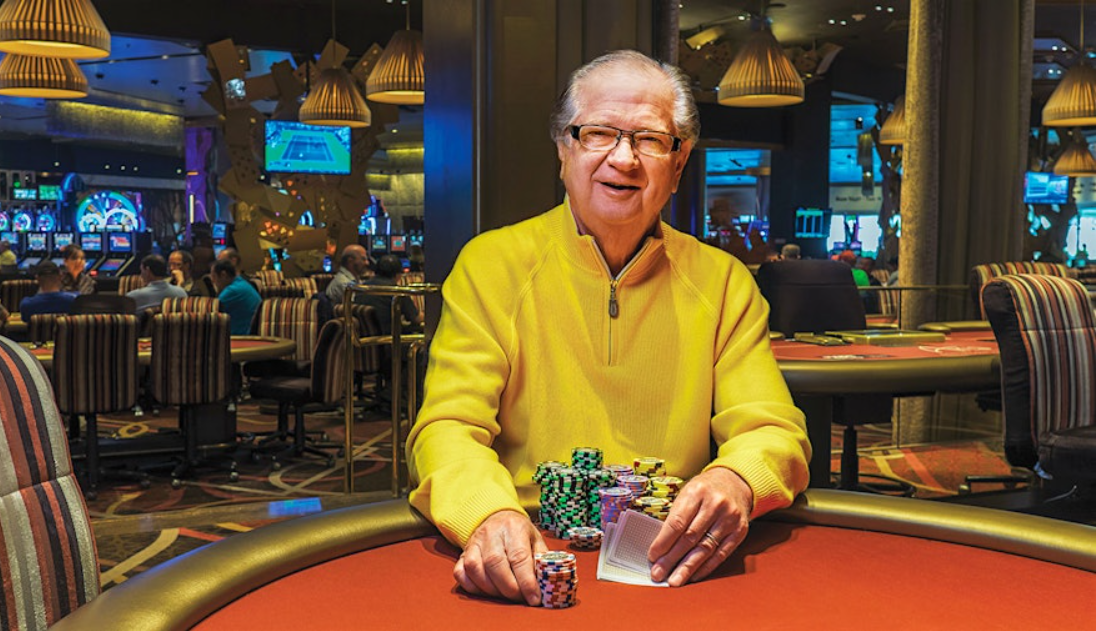
The final event before the Main Event was the $1,000 NLH, won by Jay Heimowitz. A former soldier, he left the military after winning over $10,000 in private games against fellow soldiers. Heimowitz didn't stop at one title; he eventually collected six bracelets across four different decades. Only three other legends – Billy Baxter, Phil Hellmuth, and Daniel Negreanu – have managed this.
Main Event with New Rules
The Main Event, with a buy-in of $10,000, attracted 21 players, marking a record prize pool of $210,000 exclusively for the winner. In 1975, a new, later revoked rule was introduced: each game day was strictly limited to eight hours. The goal was to prevent player exhaustion, but it resulted in a record five-day Main Event.
Six players made it to the final table. Among them was Jesse Alto, who unsuccessfully attempted to win a bracelet at seven different Main Event final tables. Another was the elegant businessman Crandell Addington, who lost in heads-up the previous year to Johnny Moss.
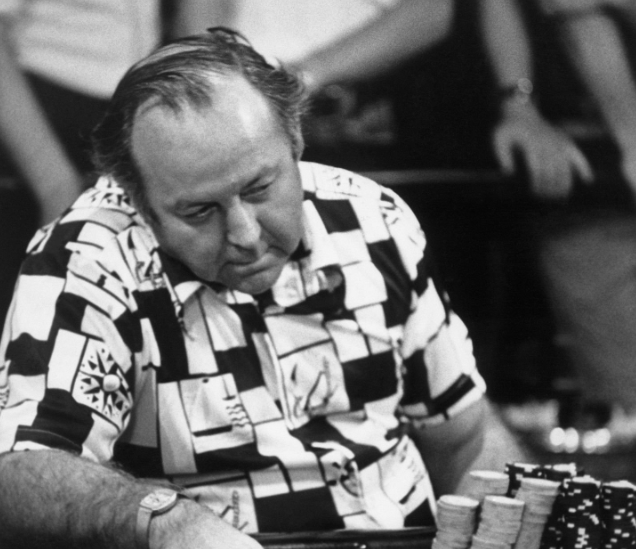
The winner was Bryan "Sailor" Roberts, a member of the legendary Texas "road gamblers" trio alongside Doyle Brunson and Amarillo Slim. His nickname came courtesy of his service in the US Navy during the Korean War. Roberts was known for his zest for life, women, parties, and bridge. Among players, he was beloved, with T. J. Cloutier recalling him as an extraordinarily generous man to whom "everyone in Las Vegas owed something."
The Decisive Hand and a Secret Deal Among Friends
The final heads-up was between Sailor Roberts and Bob Hooks, a manager at Horseshoe and a good friend of Roberts. Roberts entered the duel with a massive 3:1 chip lead.
In the decisive hand, the players went All-in on the flop of 7 h 6 c 2 c. Sailor Roberts was a step from the title, holding J s J h while Bob Hooks showed J c 9 c. Turn 9 s and river T h confirmed the victory for Roberts's jacks. Hooks sportingly acknowledged the loss, declaring, "No nicer guy could win."
What not even Benny Binion knew at the time was the secret agreement between the finalists. Roberts and Hooks had agreed in advance to split the prize in half. The main reason was fear of the IRS, a concern for all professional players. Sailor and Hooks realized that a $210,000 win for one person would surely attract unwanted attention.
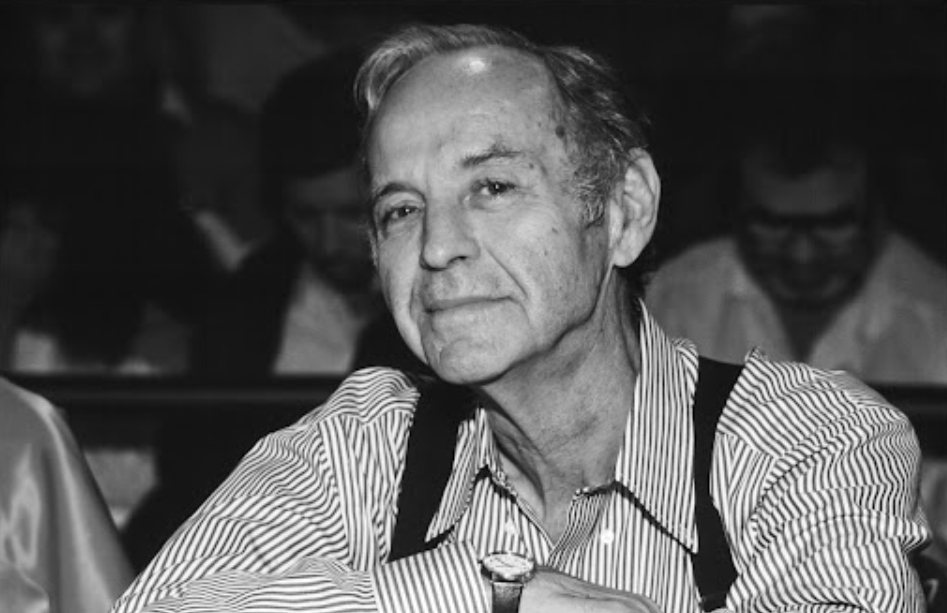
Official sources today show Sailor Roberts took home the full $210,000 for the victory, the largest prize in WSOP history at that time. Though considered one of the best players of his era, this win was his last major triumph at the WSOP. Roberts died in 1995 from hepatitis and cirrhosis of the liver and was posthumously inducted into the Poker Hall of Fame in 2012.
More WSOP History
The History of WSOP: 1974 – Johnny Moss's Return to the Throne and the Birth of Iconic Bracelets
The History of WSOP: 1973 – Puggy Pearson's Triumph and the Dawn of the Television Era
The History of WSOP: 1972 – Amarillo Slim's Controversial Win
The History of WSOP: 1971 – The First Freezeout Tournaments
The History of WSOP: 1970 - The First World Champion Elected by Vote
Sources: Wikipedia, WSOP, The Hendon Mob, Nolan Dalla, PokerListings

