

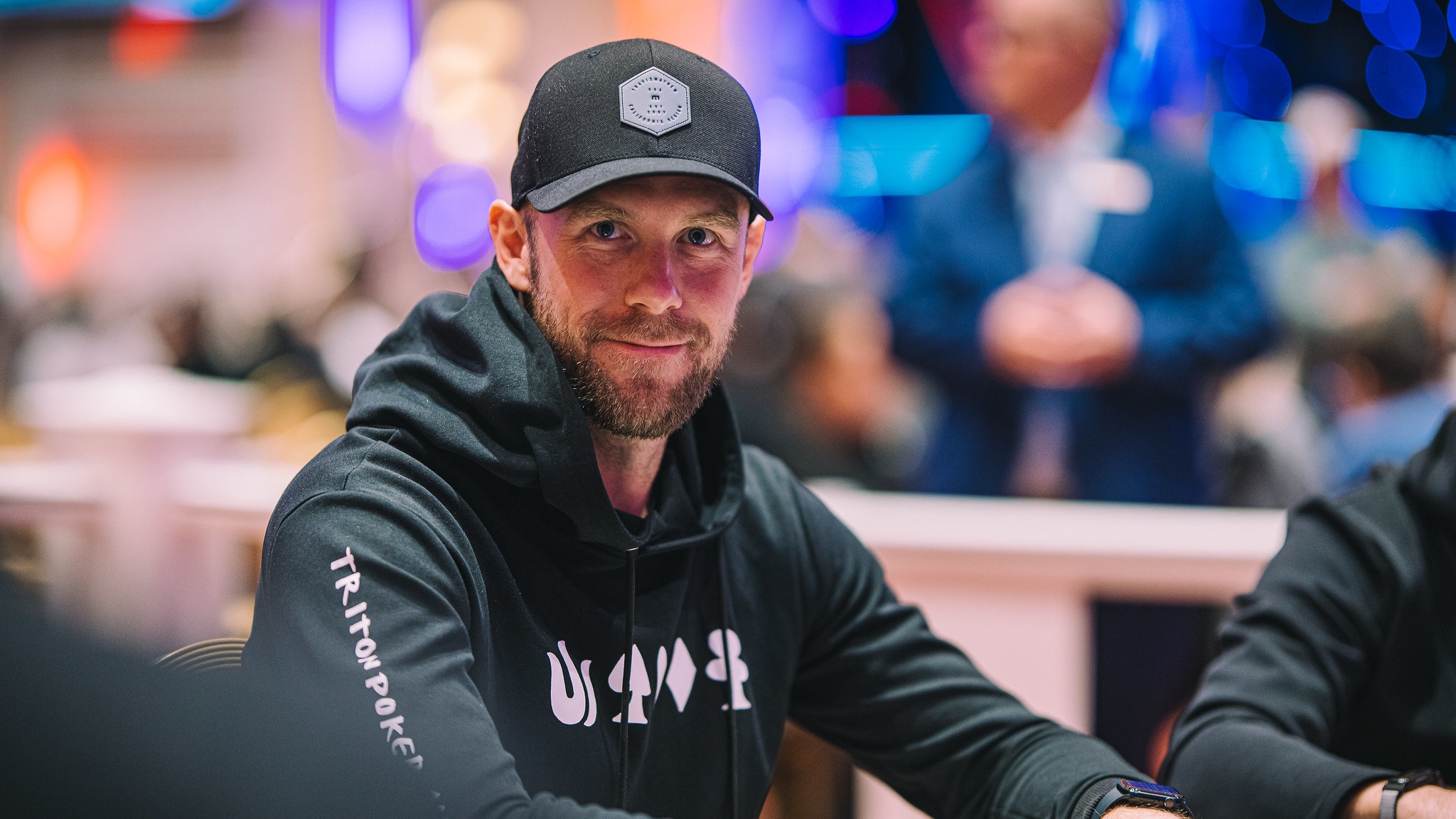
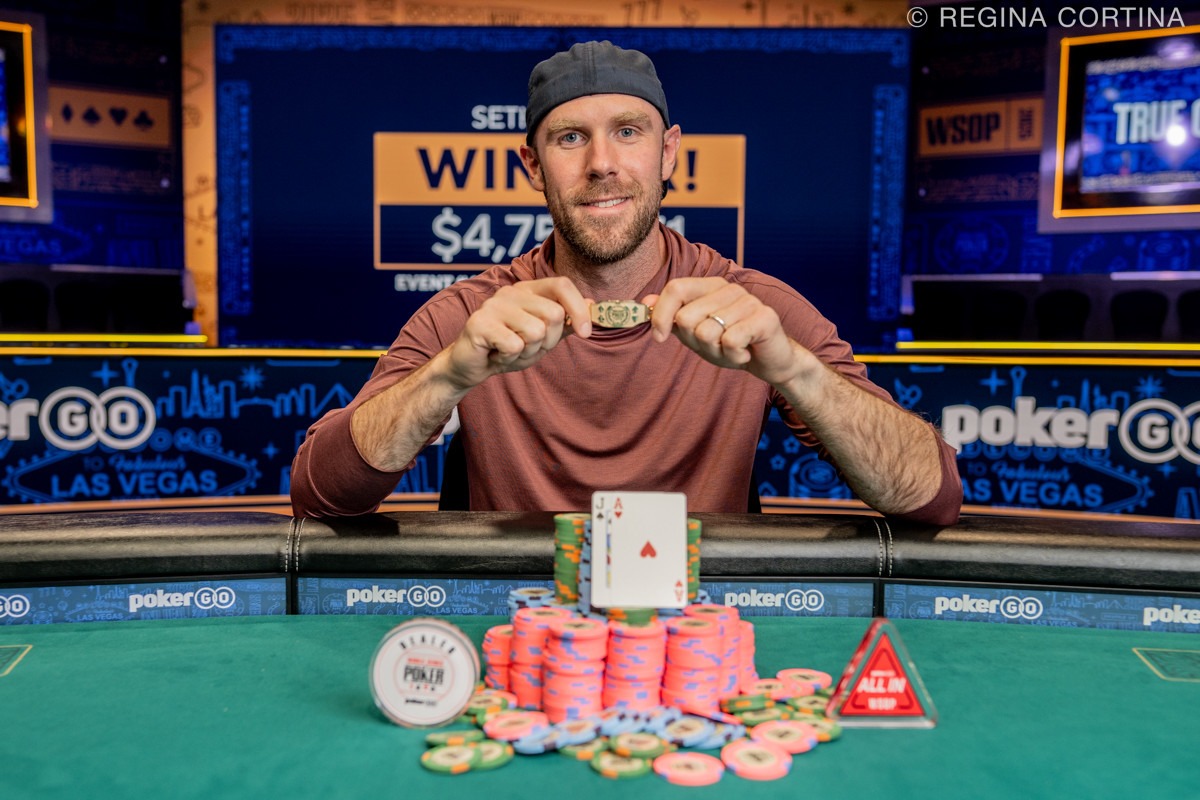
Seth Davies is an American professional poker player who has emerged among the elite of the high roller scene in recent years. He made a name for himself at major global series, winning titles like the World Poker Tour Canadian Spring Championship in 2016, and secured his first WSOP bracelet in 2025 by triumphing in the $250,000 Super High Roller for $4,752,551. His career winnings in live tournaments have surpassed $44 million.
From a Million-Dollar Deficit to the Best Festival of His Career
Davies entered 2025 prepared. He claimed he was playing the best poker of his life—fully focused, strong in live reads, table dynamics, and details that solvers can't calculate. The result? An approximate $1.3 million loss at the opening major series. Even though he cashed about $350,000, the buy-ins skyrocketed to around $1.6 to $1.7 million. That's high stakes tournament math—you can play excellently and still be deep in the red.
Later, at EPT Monte Carlo, he finished third in the €100K event. Then came the defining trip of the year—Triton Montenegro. Davies won the $50K No Limit Hold’em for around $1.5 million and claimed his first Triton title. Shortly after, he finished second in the $200K Invitational for $4.2 million, and added another major heads-up in the $30K PLO. Over several weeks, his profit was around six million. Such periods are experienced by few high stakes professionals.
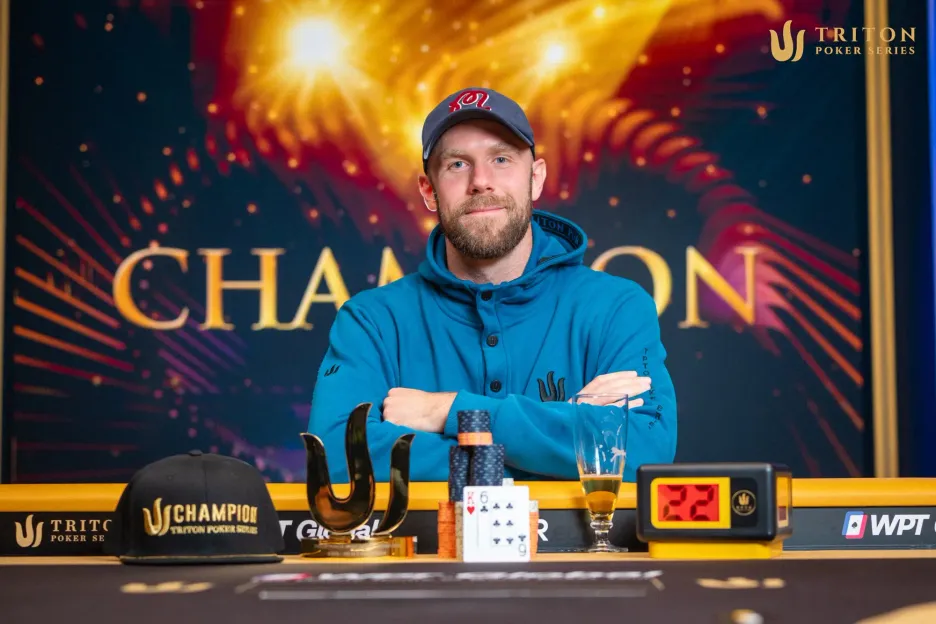
WSOP: $250K Super High Roller and His First Bracelet
Returning to Vegas, another wave followed. A final table in the $250K Super High Roller at the WSOP and a victory for $4.8 million. Within approximately six weeks, he recorded two wins over $4 million and several seven-figure caches. Together, it amounted to an approximate $10 million upswing in an extremely short time.
Tournament poker has a unique payout structure—long periods of stagnation followed by sudden spikes. Davies describes it exactly this way—a slow fall and then a sudden catapult into "space."
The Second Half of the Year: The Worst Downswing of His Career
After the euphoria came the harsh reality. The second half of the 2025 season brought the worst downswing of his career. He played about $3.5 million in buy-ins and cashed only around $100,000. Barcelona, another Triton, North American events, WSOP Bahamas. Results were elusive. Additionally, his swap partners also struggled, multiplying the pressure.
Interestingly, he didn't perceive it as a mental collapse. In high stakes tournaments, 90% of decisions are made by the entire field in the same way. The edge emerges in the remaining 10%—preparation, concentration, and details. If a player succumbs to thinking that "it's all luck," they cease being a professional.
Davies likens high stakes grinding to extreme fatigue—long series, lack of sleep, hormonal fluctuations, euphoria, and frustration. It's in these moments, he believes, that the true difference between the elite and the rest of the field is made.
$7 Million in Buy-Ins, $12 Million in Caches
He closed his 2025 season with over $7 million in buy-ins and more than $12 million in caches. This year was full of contradictions and extremes—two of the biggest wins of his career, his first Triton title, his debut WSOP bracelet—and at the same time, the toughest downswing he'd ever faced.
A year that showcased all the extremes of tournament poker. Euphoria, frustration, and the realization that the biggest battles aren't against opponents, but within one's own mind. High stakes poker is a long-term game. Variance needs time. Yet the ability to remain professional even during tough times is what determines who stays at the top in the long run.
Sources – YouTube, PokerNews, TritonPoker, Flickr/WPT

