

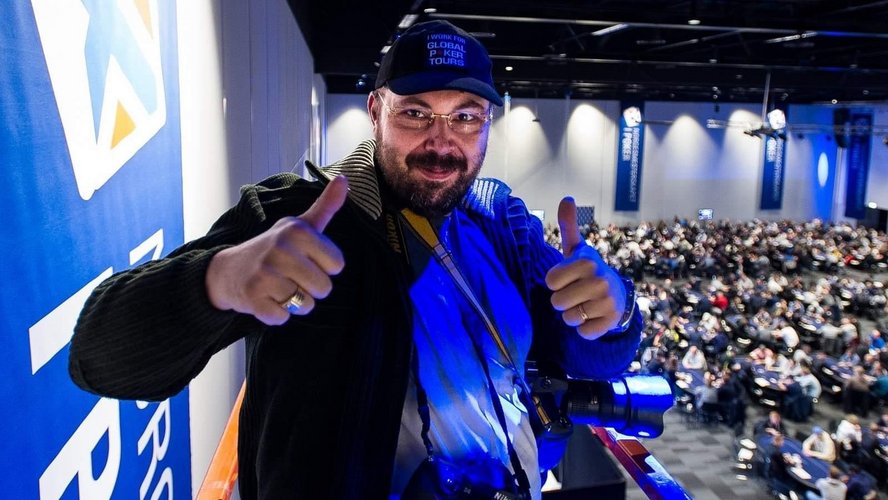
Tomáš, a colleague once called you a legend. Why do you think people see you this way? How do you feel about it?
“How do I feel about it? I don’t think so, but then again, I've been doing this for a long time and have made many friends in the poker world.”
Your name is well-known among the Czech-Slovak and even parts of the international poker community. However, some readers might not know you yet. Tell us about your professional beginnings.
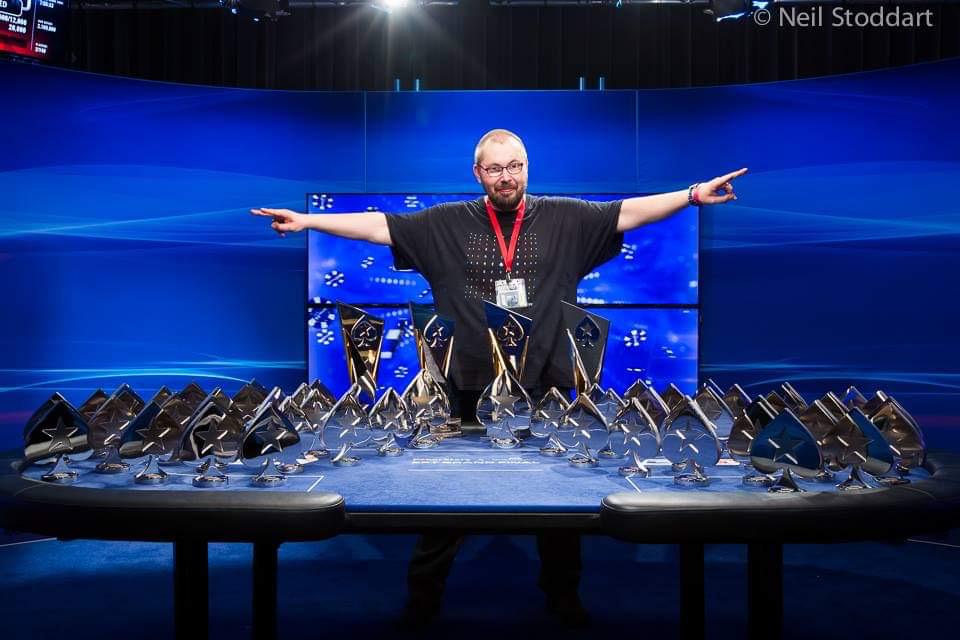
“Sometime in 2007, I met a friend who was filming poker videos, and he suggested I try photographing tournaments. That led me to Card Casino, where I started shooting the one of the first Czech Poker Tours. I enjoyed it, and eventually, I got a contract with Pokerman. From there, I got recommended to PokerStars. I photographed the first Eureka in Prague at Card Casino. They liked my work so much that they took me further. Gradually, I got more tours and worked my way from a small Czech casino to the WSOP in Las Vegas, where I was part of the official team covering the 50th anniversary of the WSOP alongside Joe Giron (poker photojournalist – editor’s note).”
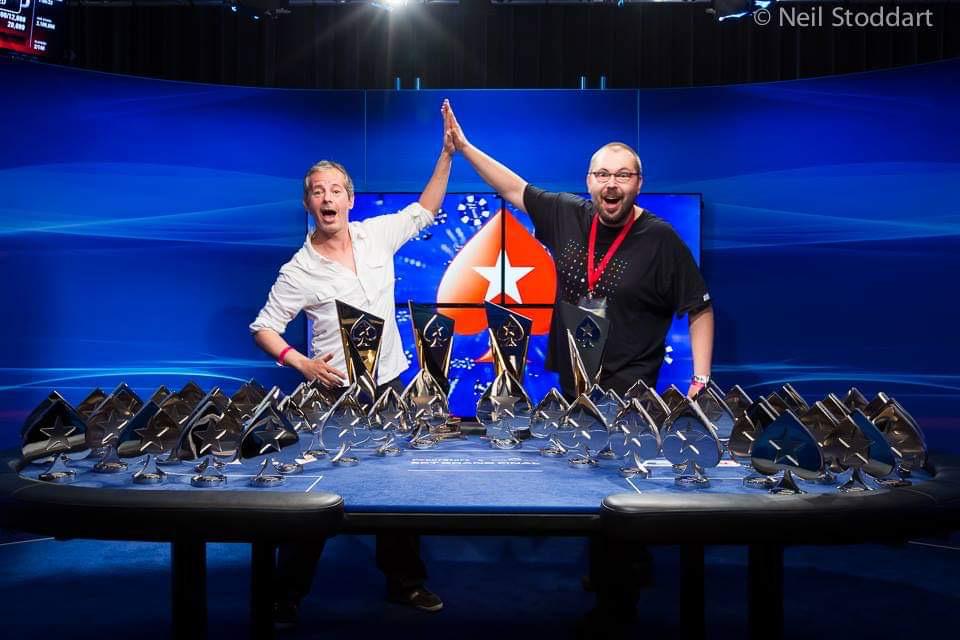
Did you also play poker back then, or how did you actually get into this environment?
“I didn't play poker, but I started at the beginning to understand the exciting actions, reactions, and emotions. So I played online and live, not too much, but just enough to get a feel for it. I even won my first hard drives playing cash games.”
A substantial part of your work involves traveling, mainly flying. Do you have any memorable experiences that stand out?
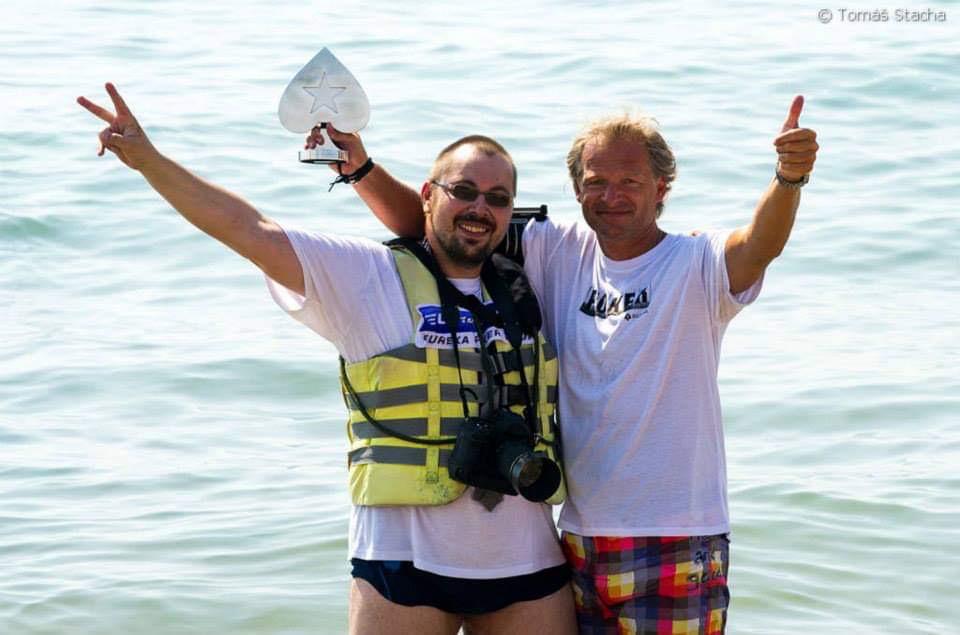
“If I were to count, I've visited about 37 countries. That's a lot of flying. The most bizarre experience was flying over the Bermuda Triangle during a typhoon. The plane dropped about fifty meters and followed the same path where planes have disappeared. Next to me sat an American Air Force fighter pilot by chance, and we joked about it, knowing it was safe. But people around us started to get sick. Landing was in ‘crosswind’, and the wind was so strong it uprooted palm trees. The pilot skidded on the nose wheel but managed to land normally at the last moment. When disembarking, the American pilot beside me, a big guy in every sense, told me, ‘That was a nice maneuver, you saved the plane.’ I replied, ‘Are you a pilot?’ and he said, ‘You’re right, but don’t tell anyone.’ But you also have beautiful flights, like flying when the crew is from around you and treats you like royalty, showering you with Swiss chocolate. Everything has its pros and cons. In any case, flying is a nice thing, and I love it.”
What do you love most about your job?
“I make people happy, and I love that. When they grow old and show photos where they won, they might remember I took them. Sometimes there are situations I haven't shared much, like photographing a big tournament where a colleague didn’t handle it well. Winners wanted me to take the photos, but I had to decline for professional reasons, and it was tough for me.”
Throughout your career, you've surely met many interesting and famous players. I assume some appealed to you more than others?
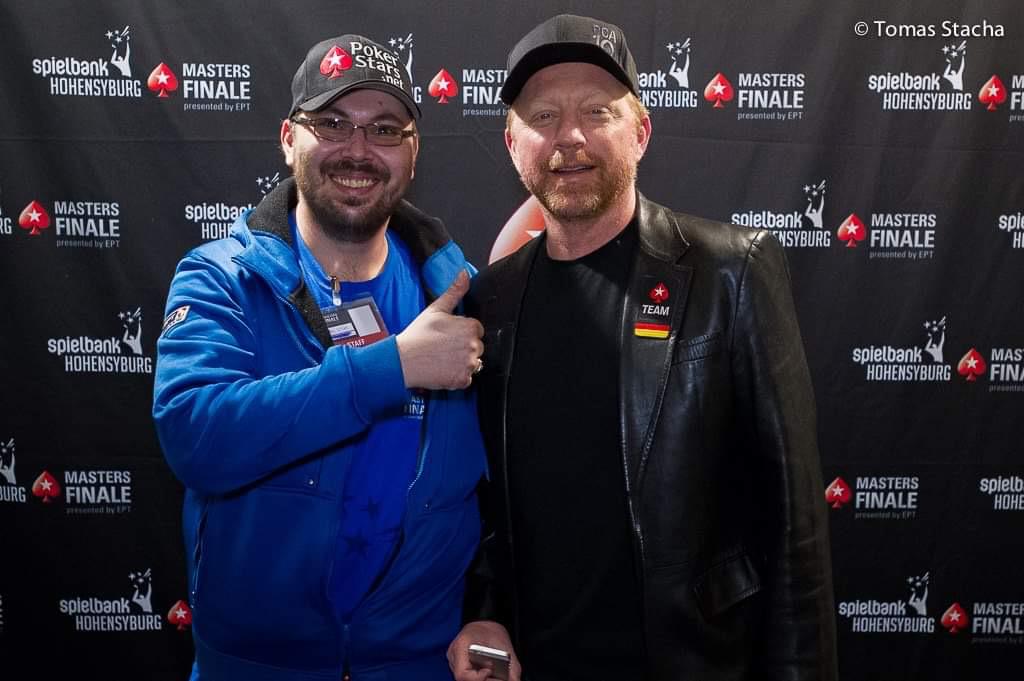
“Sure, some are more likable than others. Some players aren’t well-liked at the table, like Miki (Martin Kabrhel), but when you know him personally, he’s a good guy. I like him, which unfortunately can’t be said for most players. I’ve worked with many people. I’ve photographed Tomba, Nadal, Neymar, who are celebrities that played poker. Also with Becker. I’ve worked with players who were just starting. For example, Dzmitry Urbanovich — I photographed one of his first tournaments in Pardubice, organized by Prague's Card Casino. Over time, he became a world-class high stakes player. So I’ve known some players practically ‘from diapers’. Over the years, I’ve worked with many. From low stakes to super high stakes players. Towards the end now, it's mostly super high stakes. Many have become friends. Sam Grafton, a well-known poker coach who lived in Prague and played at Card Casino, comes to mind. I also have many poker friends in Norway, Sweden, and Finland, like Norwegian players Martin Almaas and Tom Aksel Bedell. I'm highly respected and have a friendship with Frode Fragelli, who’s considered the father of Norwegian poker.”
You’ve photographed many big tournaments. Are you able to estimate the total prize pool you have covered over the years?
“Do you think you can calculate that? But if you wanted, you could count many EPTs over the years, many WPTs. For instance, when I was in the Bahamas, we had fifty tournament winners I photographed. It can't be calculated, but it would be an astronomical amount, definitely one that nobody ever won, and it will take a long time before anyone does.”
Do you remember the highest win you’ve photographed?
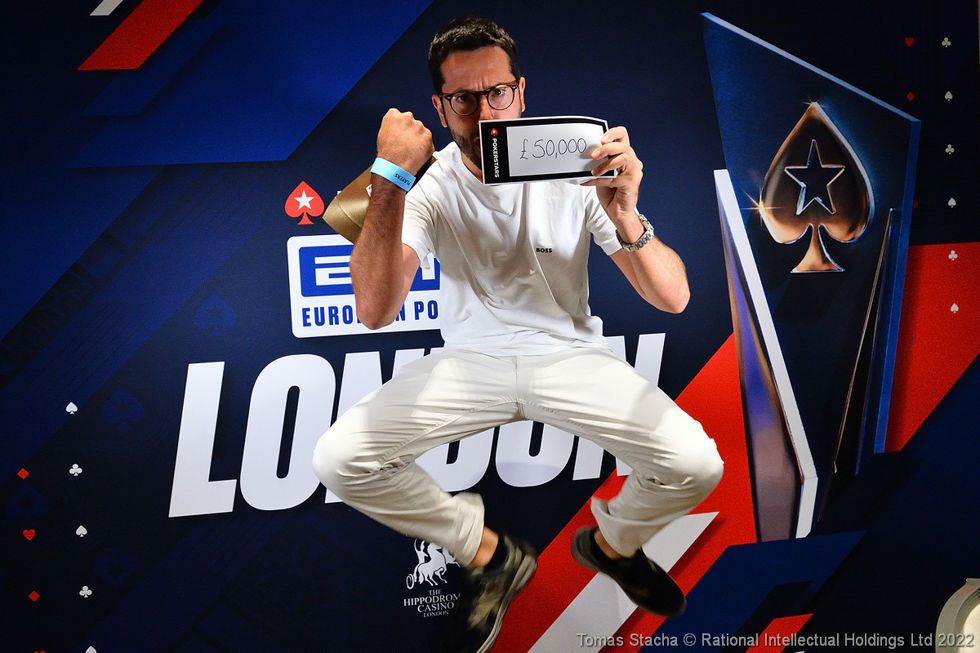
“It was certainly over a million dollars, multiple times. An interesting moment I captured last year in London. There was a High Roller with a €25,000 buy-in, Mystery Bounty. Juan Pardo participated, you probably know the name. He’s one of the top players, a good guy. He drew the Mystery Bounty main prize of €50,000, and there were still some envelopes left. I told him, ‘Juan, open this envelope, and I'll tell you how much it was.’ Juan did it, turned over another €50,000 prize, and I told him, ‘Juan, now jump.’ And he jumped, and I photographed it. It's worth noting that he also won the whole thing, so the tournament was generously paid off.”
What are some photos you consider special in your career?
“Regarding photos I've taken, I get various ideas sometimes. I’m creative in that sense. One fine day in the Bahamas, I decided I wanted to do something no one ever did. I went to the dolphinarium director to arrange it. I took a winner, placed him among dolphins, and they jumped over him, with a view of the room where Michael Jackson sometimes stayed. So that was probably the most I’ve ever photographed. Of course, the beloved dolphins were well-rewarded with lots of fish afterward. That’s a photo I dreamed up and executed, and it wasn’t easy.”
It sounds like being a poker photographer is physically demanding.
“First, you travel for hours. To these tournaments, you carry between 50 to 70 kilos of gear. A day might involve hundreds of flights, kneeling down 100-200 times, and lifting a three-kilo camera 3,000 times. So, add it up. It's nonstop fitness. During a really big and demanding tournament, I can lose 8 kilos in 10 days.”
Don’t miss the second part of this interview, where you’ll learn how to photograph a fake Boris Becker, which world pros he gets along with best, what it takes to create a good photo, and whether he has any time for hobbies with such a busy schedule....

