

There was no ceremonial signing or celebratory press conference in Augusta. Instead, the law arrived via political inertia. Governor Janet Mills neither signed nor vetoed the bill, allowing it to become law automatically after Maine’s statutory review window expired. While Mills acknowledged concerns about gambling expansion, she framed regulation as the more responsible path forward, emphasizing the role of the state’s Gambling Control Unit in building safeguards while ensuring meaningful economic participation for tribal nations.
For players, the headline sparks immediate daydreams: legal cash games, online tournament series from the couch, and another long-missing dot added to the national online poker map. For the industry, however, Maine’s legalization looks less like a grand opening and more like an announcement that the venue has been approved — with the tables, dealers, and rulebook still to come.
A Tribal-First Framework With Only Four Doors
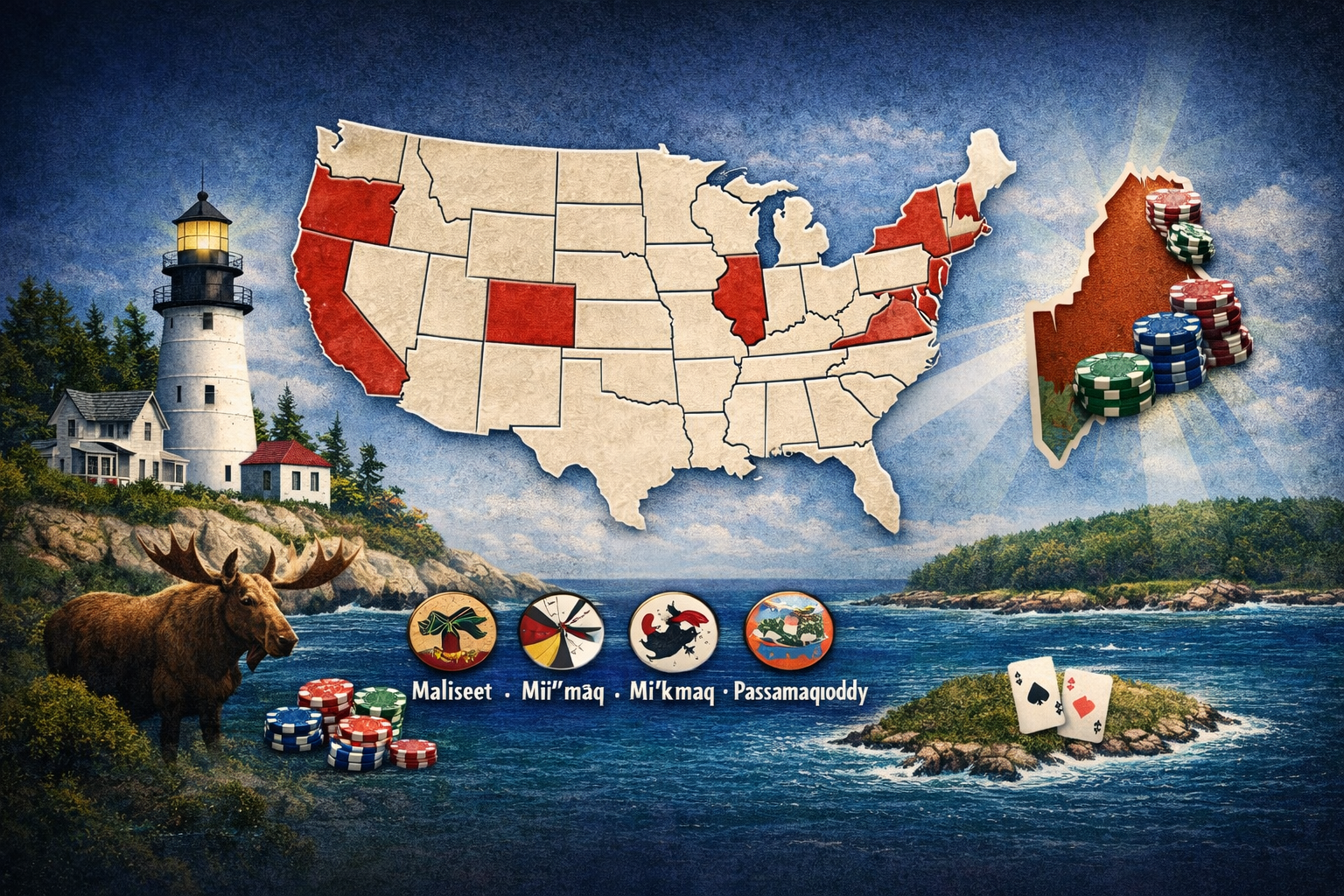
LD 1164 is built around Maine’s four federally recognized tribes, collectively known as the Wabanaki Nations. The Houlton Band of Maliseet Indians, the Mi’kmaq Nation, the Passamaquoddy Tribe, and the Penobscot Nation are granted exclusive rights to operate internet gaming, including online poker, typically through partnerships with established platform providers.
In practical terms, that structure creates a tightly controlled, four-license market. Each tribe may align with a commercial operator, but regulatory authority remains firmly with the Gambling Control Unit inside the Department of Public Safety — the same body that oversees other gambling verticals in the state.
There is real financial ambition behind the model. Reporting surrounding the bill suggests that, once fully operational, online casino-style gaming in Maine could generate more than 100.000.000$ in tax revenue over a ten-year span. Those projections help explain why both supporters and critics are already digging in.
The Tax Rate Matters — And Maine Set It Like a Serious Market
One of the most important variables for potential poker operators is taxation. Under LD 1164, Maine will take 18% of adjusted gross internet gaming receipts, with funds credited to the Gambling Control Unit for distribution under the state’s designated allocations.
That figure places Maine squarely in the “serious but workable” category. It is high enough to support state programs and tribal revenue streams, yet not so aggressive that it automatically deters major platforms. In short, this is not a token legalization designed to stall — it is a framework that appears to want reputable operators to succeed.
The Catch: Maine Could Become a Poker Island
Here is where the poker-specific reality check sets in. Online poker thrives on liquidity. More players mean fuller tables, larger tournament guarantees, and a healthier ecosystem across all stakes. Maine’s population sits at roughly 1.400.000, raising an immediate concern: can an intrastate-only player pool sustain the level of action modern online poker players expect?
As PokerNews has noted, LD 1164 does not explicitly authorize Maine to join the Multi-State Internet Gaming Agreement (MSIGA), the compact that allows participating states to share player pools. Without that option, Maine risks launching as a “poker island” — legal and regulated, but limited in scale. Liquidity sharing is not off the table forever. However, accessing MSIGA would likely require additional legislative or regulatory steps after launch. Until then, Maine players may find themselves fenced off from the larger tournaments and deeper fields available in states like New Jersey, Michigan, or Nevada.
A Familiar Maine Story: Big Policy, Slow Burn, Political Risk
If the rollout feels cautious rather than explosive, history suggests why. Maine’s sports betting expansion followed a similar tribal-centric path and ultimately reached launch — but not without delays.
Now, opponents are already discussing the possibility of a people’s veto, a referendum process that could delay implementation or attempt to overturn the law entirely. According to the Bangor Daily News, resistance includes voices connected to existing brick-and-mortar casino interests. Even the threat of a ballot fight introduces uncertainty for regulators and potential operators alike.
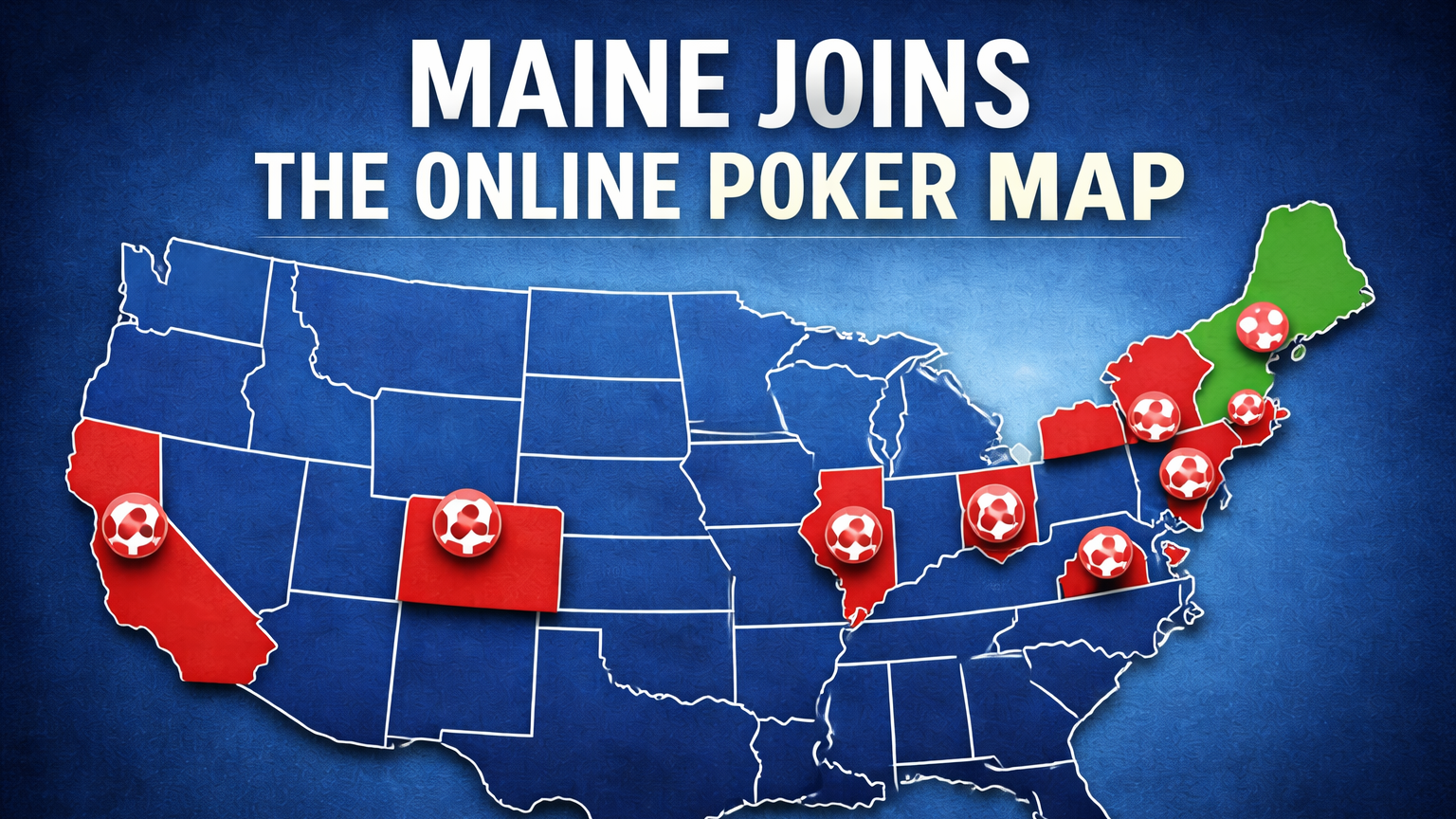
So yes, Maine officially becomes the ninth U.S. state to legalize online poker, joining Nevada, New Jersey, Delaware, Pennsylvania, Michigan, West Virginia, Rhode Island, and Connecticut on the regulated map. But the most important hands have not been dealt yet. What comes next is the slow grind of rulemaking, licensing, platform partnerships, and — possibly — political confrontation.
For Maine poker players, the win is real. The door to legal online poker is finally open. Now comes the part every poker player understands: turning a promising spot into a game worth playing.
Sources: bangordailynews, pokernews, legislature.maine, wikimedia

