

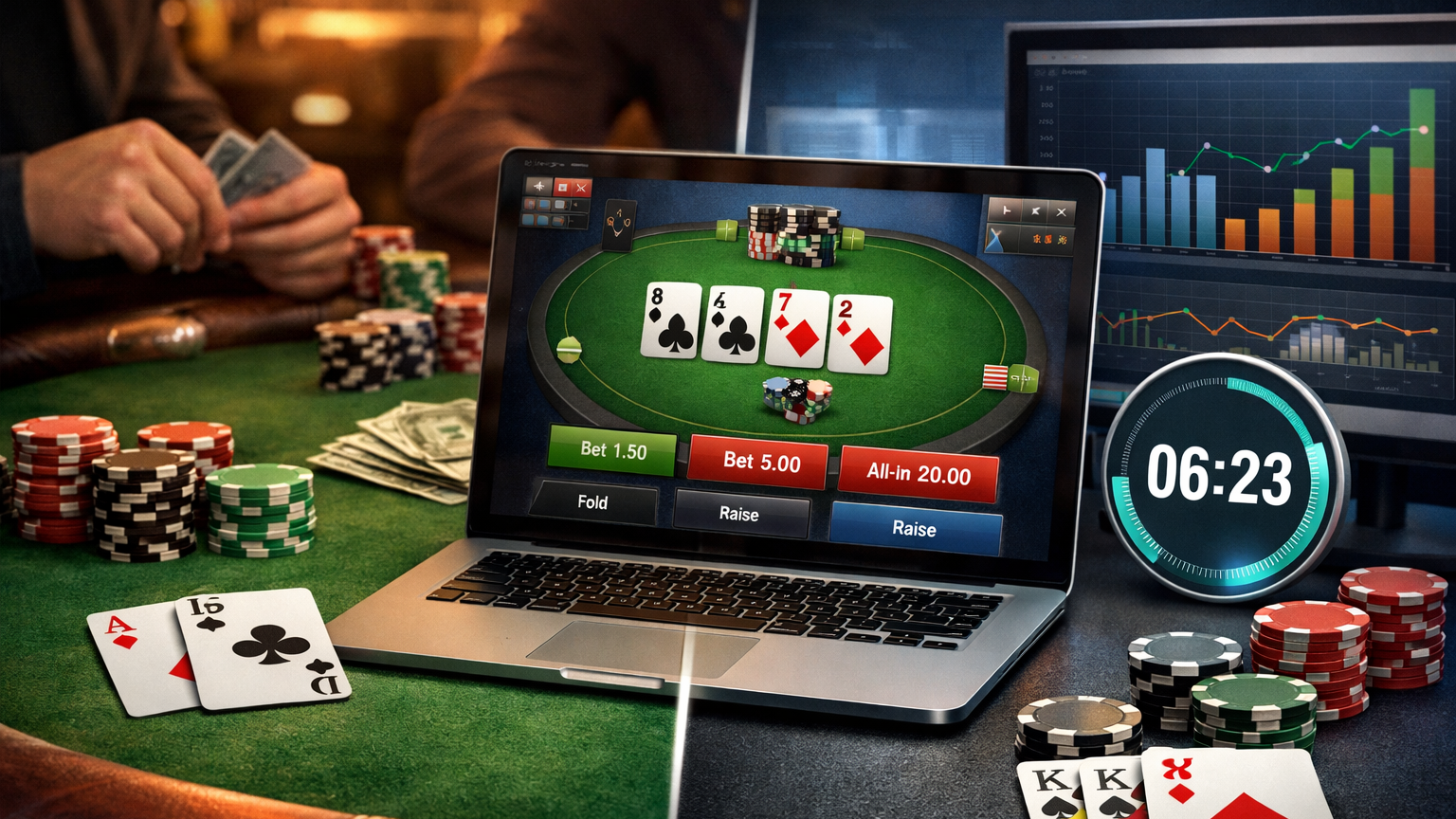
If you want steady game selection and clear table stakes, playing at an AU casino lets you apply these reads across cash and MTT formats. The mechanics below work in both because they focus on decision making patterns rather than physical tells.
Timing tells, digitised
In a live room a snap check or a long tank often says more than words. Online, the clock is your window. Most platforms standardise decision time which makes outliers stand out. Quick actions in unexpected spots or long pauses in routine ones deserve a second look.
- Instant continuation bets on dry boards from players who usually hesitate can signal autopilot. If their sizing is small as well, consider floating wider with backdoors or raising more often as a bluff.
- Long pauses before small river bets often indicate uncertainty rather than trap. If the line leading there is cautious you can raise thin for value or apply pressure with balanced bluffs.
- Fast checks from regulars in multiway pots usually show pot control. Take the free card with your draws then attack on turns that favour your range.
Treat timing as a nudge not a verdict. It works best when it agrees with board texture and player profile.
Bet sizing fingerprints
Live reads lean on chip stacks and hand theatrics. Online you get sliders and presets. Most players still reveal intent when they stray from their defaults.
- Oddball overbets from tight players are rarely balanced. On static runouts they are value heavy, on dynamic boards they can be protection with hands that fear rivers. Against the former fold marginal bluff catchers, against the latter consider calling with strong draws or top pairs that block nutted ranges.
- Half pot c-bets that never change suggest a one size strategy. Raise more often when you have equity and attack scare cards on later streets because their sizing will not adjust.
- Pint sized probes on turns after flop checks often cap strength. If your range improves more than theirs, raise for thin value or use larger pressure with combo draws.
- Min raises from recreational players still skew strong. Respect them on rivers. Earlier in the hand treat them like information bets and re-raise polarized with value plus your best semi bluffs.
Board coverage and story consistency
At live tables you learn how opponents tell a story with their hands. Online it is the same script without the facial expressions. Ask two questions every street, does this sizing fit the part of the range they are repping, and who owns this board. On low connected textures the preflop raiser has permission to lean in. On paired middling boards the caller holds more trips and full houses which lets you reduce c-bet volume and lean into check raises when appropriate. Reads are not magic, they are permission slips to push edges where the math already points.

HUD or no HUD, profile anyway
You do not need a tracker to profile tendencies. Create quick mental tags based on showdowns and obvious lines. Three or four simple labels go a long way, tight-passive, tight-aggressive, loose-passive, loose-aggressive. Note bet sizes shown at showdown, especially odd overbets or tiny blockers. The goal is to predict deviations before they happen, then act decisively when a line fits the picture.
Translating table talk into chat cadence
Live table chatter gives away comfort levels. Online chat volume and timing can hint at state of mind. A player who types during hands then suddenly goes silent when pots grow may be concentrating on big decisions. Do not overfit, but combine this with timing to decide when to thin value or when to slow down and realise equity.
A compact session framework that sharpens reads
- Start with a two orbit scan noting default c-bet sizes by position and any outlier timings.
- Mark one seat per table as your “target profile” and watch that player until you have at least two showdowns.
- Review tags on breaks and adjust your plan, isolate the loose-passive, three-bet the tight-open seats, and avoid marginal calls versus value-heavy lines.
Keep the framework light. You are training observation, not grinding spreadsheets.
Population exploits that still print
Certain online pools share habits that mirror live rooms. At low to mid stakes many players under bluff rivers after calling turn raises, so fold bluff catchers without key blockers. Versus unknowns in three-bet pots, flop aggression is high but turn barrels slow on scare cards, which gives you profitable floats with backdoor equity and good blockers. These are not universal truths, they are starting points you refine with table specific reads.
Protecting yourself from false signals
Lag, multi tabling, and distractions can fake tells. A snap action may be a preset. A long tank might be a delivery at the door. Anchor every read to something else, board texture, bet size, or previous history. When two signals agree you have an edge. When they fight, default to solid range play and let the next hand provide more data.
The bottom line
Live reads did not vanish when poker moved online. They became timing windows, slider choices, and repeatable rhythms you can spot with a calm eye. Build small profiles, watch for consistency across streets, and act when the story and the numbers match. Do that steadily and the edges you learned under casino lights will keep paying off on a screen.

