

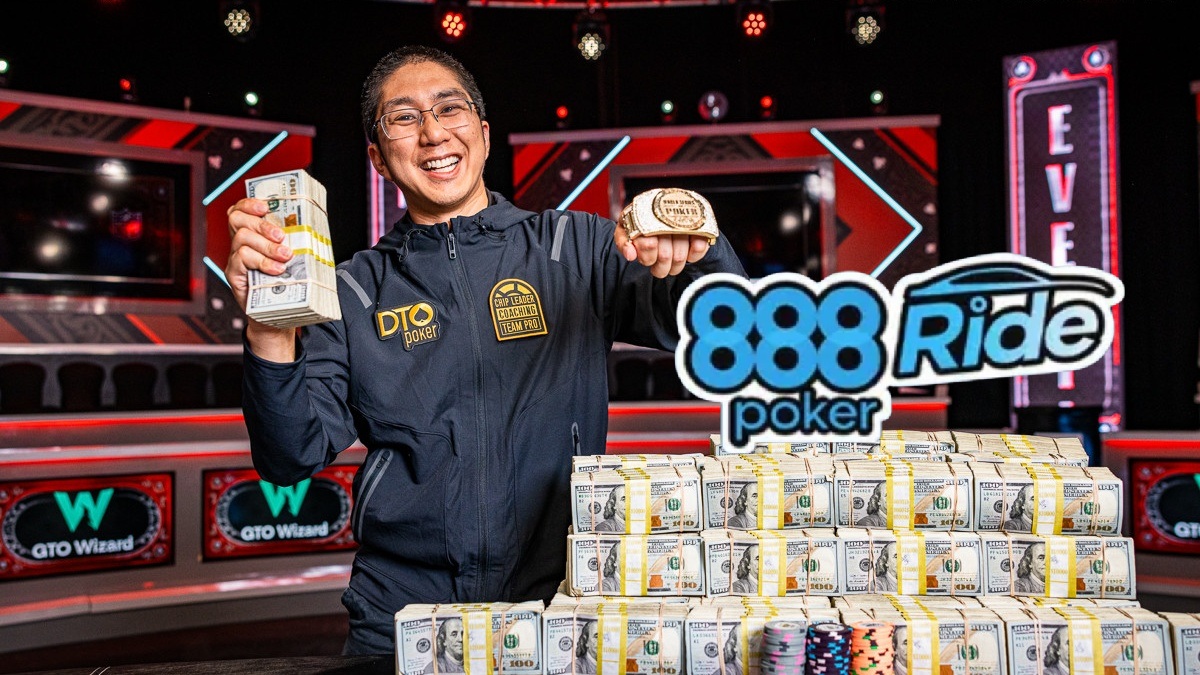
For most players, winning the World Series of Poker Main Event is the ultimate goal. A career-defining moment that validates every decision leading up to it. Yet Jonathan Tamayo doesn't see it that way. In a deep and contemplative interview on the 888Ride show, he describes his Main Event win in 2024 not as a culmination but as an exception, where opportunity met preparation, timing, and discipline.
His journey into poker was gradual and largely accidental. When the 2008 financial crisis hit after school, he turned to poker as a temporary solution or a means to survive uncertain times. His plan was always to return to a conventional career. But that return never materialized.
Poker as a Job with No Guarantees
Tamayo never talked about poker as something he thought he would conquer. Watching top players at the start of his career, he doubted whether he belonged among them. Poker seemed fragile, uncertain, and inconceivable as a long-term plan. Even after deep runs in the WSOP Main Event in 2009 and 2015, he didn't see himself as destined to win.
Those earlier “runs” taught him different lessons. In 2009, exhaustion, hunger, and media obligations led to mistakes he still vividly recalls. He realized surviving long tournaments wasn't just a technical matter. It was physical and mental. “You eat when you need to eat. Rest when you can. You say no when a yes costs you equity,” things he didn't know back then.
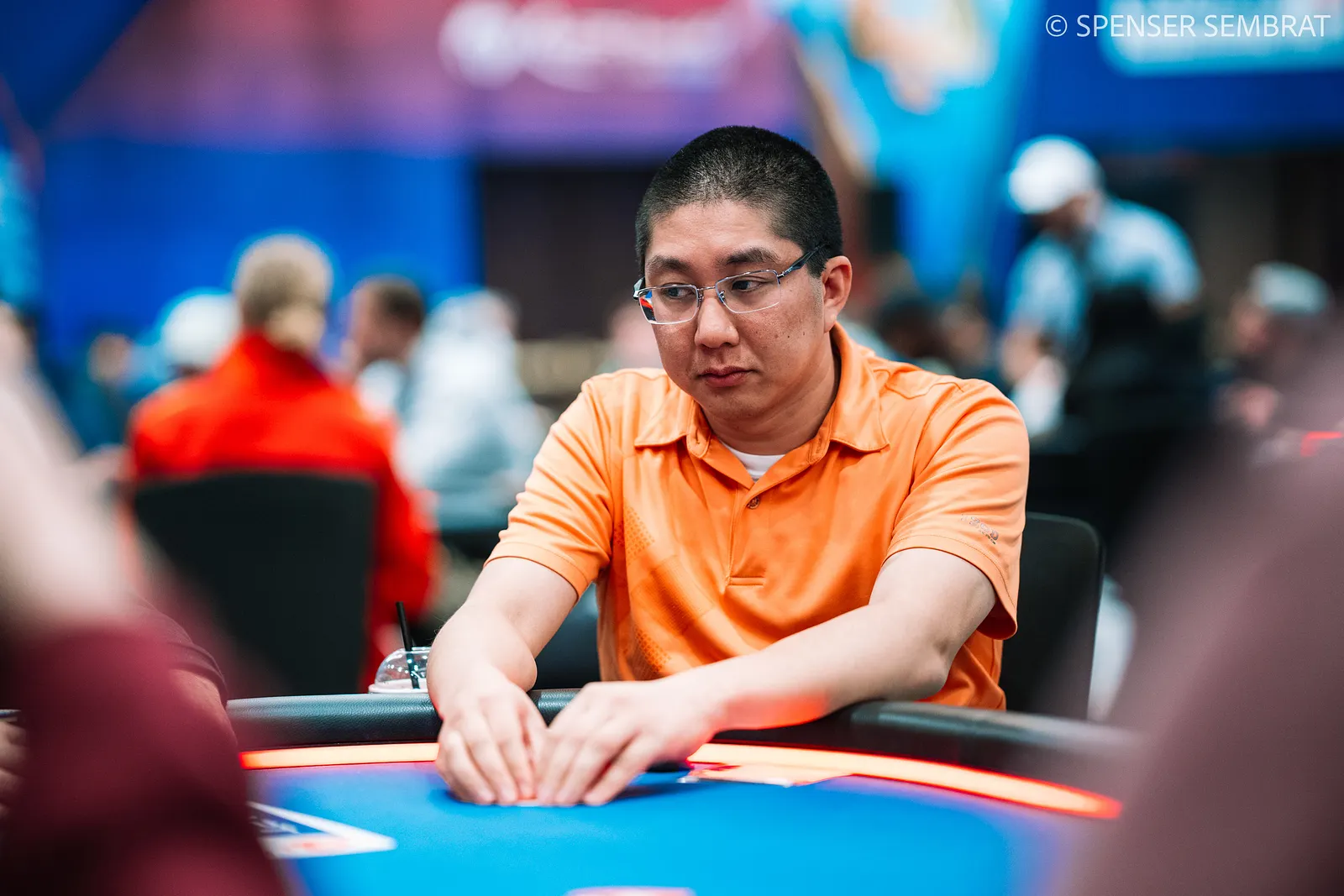
In 2015, the lesson was different. “Sometimes you do everything right and still quietly bust. No dramatic mistake, no nerve-wracking defining hand. Just rising blinds, a few lost small pots, and suddenly your average stack is gone. Poker doesn’t always give immediate feedback even when you play well.”
The Game Evolved Faster Than Players Realized
Looking back, Tamayo openly discusses how little players truly understood about the game fifteen years ago. Strategies and plans emerged from discussions, intuition, and imitation. If someone was winning, it was assumed their approach was correct. There wasn't a proper way to verify anything.
This completely changed with the advent of solvers - technology not only “smoothed out” strategy but also exposed many past flaws. “Tight play was praised because no one wanted to risk chips. Aggression worked not because people understood it, but because no one could properly punish it. Today, these assumptions no longer hold.” Tamayo admits that if he had today’s knowledge back in 2009, the tournament would have looked completely different. But poker doesn’t allow for retrospective fixes - you play with what you know at the time.
Trusting the Situation
One of the most discussed moments from the 2024 final table was Tamayo’s fold of pocket queens under extreme ICM pressure. It seemed shocking, even reckless to some. But for him, it was neither bold nor dramatic – it was simply a spot he was prepared for. After discussing scenarios and stack values with his rail before resuming play, he decided to trust the situation, not the cards.
With parameters set in advance, the decision became mechanical. “Kings plus” meant “kings plus.” The specific hand didn’t matter. Later analysis showed the fold was technically incorrect, but Tamayo doesn’t regret it. “In a break-even situation, the value of preserving tournament life was higher than theoretical accuracy.”
The Laptopgate Affair
A major part of the final table controversy revolved around laptops and the impression of real-time solver assistance. Tamayo clearly explains what actually happened. “It wasn’t live solver use, no instant outputs. Just reminders, slight strategic adjustments, and situational awareness based on work done the days before.”
Meaningful solver outputs require time. Inputs need to be accurate, and outputs must be correctly interpreted. Context is crucial, knowing when and how stacks changed, when game dynamics shifted. None of this fits into decision-making during a tournament hand.
What Comes After the Peak
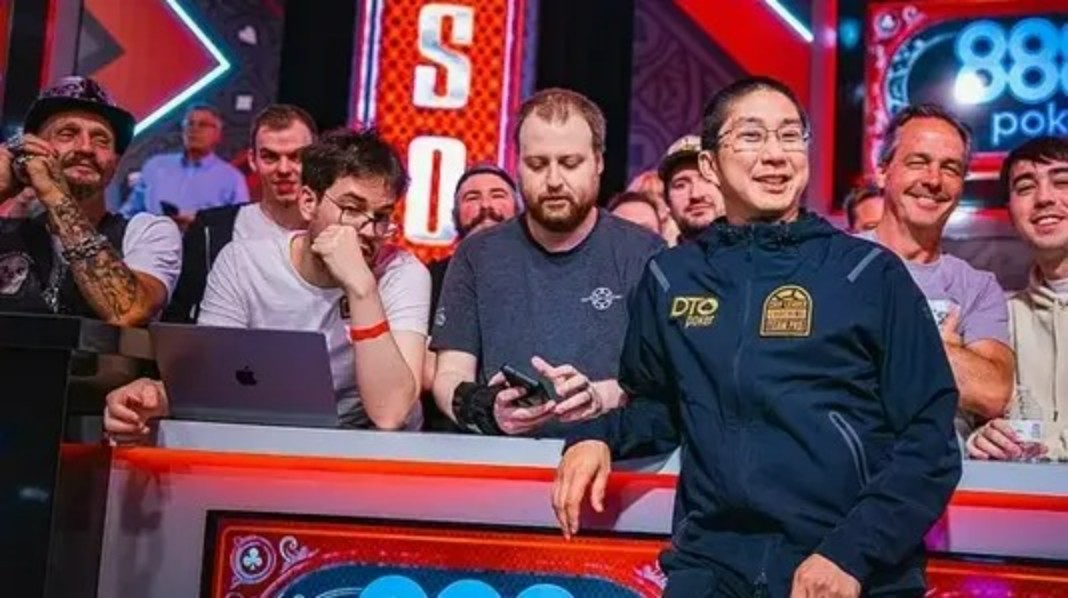
Winning the Main Event didn’t bring Tamayo peace of mind, quite the opposite. It brought uncertainty. “Motivation is harder when you’ve achieved your goal. Grinding mid stakes cash games for bills once made sense. Now it doesn’t.” Tamayo admits he doesn't yet know what the next chapter will look like. He wants to play selectively, choose events, and prioritize his personal life quality.
He’s candid about something many champions don’t say out loud: “Winning doesn’t simplify the game, it just changes the questions you start asking yourself.” This episode of the 888Ride podcast strips away the fantasy surrounding the greatest poker triumph and reveals a champion who doesn’t claim to have achieved mastery, security, or ‘enlightenment.’
Instead, it portrays poker as it truly is. A game shaped by timing, discipline, restraint, and acceptance of uncertainty. Tamayo won not because he “solved” poker but because he respected how little control the game actually offers. And perhaps that’s the most honest lesson a world champion can impart.
More from 888 Ride:
Ryan Riess in 888Ride: “Confidence is the Weapon You Can't Play Poker Without”
Maria Ho in 888Ride: “Failure Is Nothing to Be Afraid of”
Will Jaffe on 888Ride: Heated Debates, PLO Grind, and the WSOP That Changed His Life
Josh Arieh on 888Ride: Seven Bracelets, a Bruised Ego, and a Comeback That Isn't Over
Joe Cada in 888Ride: People said I was just lucky. But I knew I could play
Matt Berkey: High roller players may be twenty times better than me – but I still earn more
Daniel Negreanu: The more haters I have, the more I realize that I'm somebody
Shaun Deeb: I love calling out cheats and fraudsters; the poker industry needs cleaning up
Sources – PodBean, Reddit, YouTube, PokerNews

