

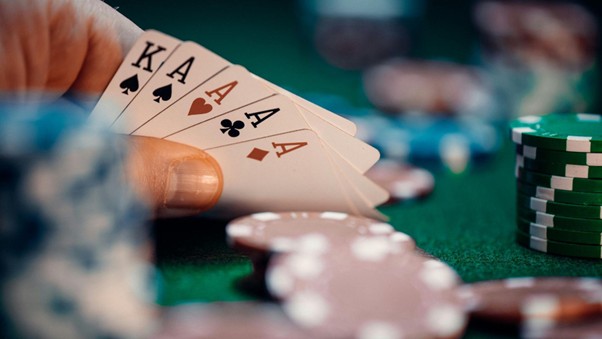
Bridge requires logic, discipline, pattern recognition, and a talent for taking calculated risks. Those abilities form a strong strategic foundation that gives bridge players an advantage when transitioning into online poker, especially in terms of long-term performance. The familiar analytical instincts developed at the bridge table transform into powerful tools that elevate strategic choices and improve overall results at the virtual felt, thanks to the parallels between both games.
Which Bridge Skills Align With Poker
Bridge players work with incomplete information, evaluate odds on the fly, and maintain strong decision quality across long sessions, which integrates directly into modern online poker strategy. Poker hands also depend heavily on range analysis, reasoning, and disciplined execution over large sample sizes.
The most recent study on real-money poker, "The Dominance of Skill in Online Poker" (2022/2023), clearly demonstrates this pattern. The study followed 91,439 players over a period of 40 months, analyzing more than 85 million online poker hands. The researchers developed statistical tests to measure the extent to which skill influences outcomes. Their results showed that individual performance rises and falls with skill, not due to random card distribution. This study reinforces the reality that poker is a skill game in the long run rather than a short-term gamble, and the poker environment rewards minds already trained to adjust rapidly to new information.
Reading Opponents
Bridge strategy involves extracting information from bids, phase shifts, and carding sequences. Online poker offers a parallel set of signals, expressed through preflop raise frequencies, sizing patterns, timing differences, and postflop aggression rates. When a player raises frequently from an early position, makes continuation bets automatically, or hesitates before making a significant river decision, these actions reveal information about their hand strength and comfort level.
A bridge-trained eye can naturally organize those clues into opponent profiles that grow more accurate as more hands unfold. The analytical habit of forming and updating inferences based on sequences of actions makes poker feel like an extension of the same deductive skills used to interpret auctions and defenses at the bridge table.
Probabilities, Ranges, and Long-Run Logic
Bridge leans on probabilistic thinking, whether you’re finessing, protecting yourself against a nasty split, or choosing a safer line instead of chasing extra tricks. Poker follows the same logic with expected value decisions, range estimation, and long-term risk assessment. Strong players treat every hand as part of a much bigger statistical picture, not a one-off moment, which is why preflop charts, postflop ranges, and structured decision trees fill the same role that suit patterns and card distributions fill in bridge.
Modern training frameworks, built on large datasets, demonstrate how consistent and repeatable optimal decisions become in everyday poker situations. That structure aligns naturally with the analytical habits that experienced bridge players already employ.
Bankroll Management
Disciplined bidding and careful risk management are central to strong bridge partnerships, as they prevent reckless decisions that can create high volatility. Poker follows the same logic with bankroll management, smart stake selection, and intentional format choices. Skilled players protect their bankroll by choosing games that fit their experience level, avoiding risky traps, and focusing on steady decision quality instead of reacting emotionally to short-term swings. Many players put this into practice on regulated platforms such as Borgata Online Casino, where various stake levels and structured game formats make it easy to apply solid bankroll habits.
This mirrors the way strong bridge pairs handle competitive auctions. They start from a position of stability, take calculated aggression only when the conditions justify it, and constantly weigh potential gains against potential losses.
Emotional Stability and Decision Quality
Playing in bridge tournaments trains players to reset quickly, maintain composure, and return to analytical reasoning after mistakes or unlucky breaks. Poker also demands a high level of emotional resilience because variance produces downswings that can only be navigated effectively through calm, disciplined decision making. Studies in neuroscience reveal that emotional spikes can impair rational judgment. The most successful poker players train themselves by employing warm-up routines, mental breaks, structured reviews, and controlled pacing throughout their sessions.
Bridge experience builds emotional resilience that enables clear thinking after difficult moments and allows well-reasoned decisions to dominate long-term results rather than emotional impulses.

Why Bridge Players Hold a Natural Advantage
The global online poker market is growing rapidly, increasing from approximately $5.3 billion in 2024 to a projected $11 billion by 2030. As the field becomes more competitive, players who think systematically gain a clear edge. Bridge players excel in structured environments because they already understand how to utilize frameworks that guide their decisions under pressure. That mindset translates seamlessly into a personal poker system that keeps choices consistent, logical, and geared toward long-run success.
They also arrive with solid foundations. Probabilistic thinking, inference-based analysis, emotional steadiness, patience, and disciplined execution are already integral to their approach. Once those strengths combine with poker-specific tools like structured range work, balanced aggression, and responsible bankroll management, they develop a strategic profile that naturally positions them for long-term winning results.
Bridge Skills Form the Ideal Foundation for Online Poker
Bridge cultivates the exact cognitive skills required for sustained success in online poker, including inference, logic, risk management, and emotional control. Online poker converts these abilities into clear competitive advantages by rewarding disciplined decision-making, intense observation, and consistent long-term strategy rather than short-term luck. Once bridge-trained reasoning is combined with modern poker fundamentals, the game transforms into a familiar and rewarding long-term challenge, where well-managed thought processes outperform impulsive behavior, and where the skills acquired through years of bridge experience become the foundation of strong, steady results on the online poker tables.

