


This variation not only enhances the game's allure but also offers players a chance to experience poker in its many forms. With that said, on this page, we will be taking a closer look at how poker differs around the world to give you deeper insights into one of the most beloved card games.
The rise of online poker
The digital revolution has significantly impacted how poker is played globally. Online platforms have made it easier for players everywhere to participate in games and tournaments, regardless of where they live. This shift has led to a more diverse player base, although poker is still enjoyed in its physical form at land based venues by millions of players worldwide.
However, players should always be aware of the legal landscape of playing poker online or offline in their respective countries. Resources like a reputable offshore guide can provide valuable information on where and how to play online poker legally and safely.
Variations of poker
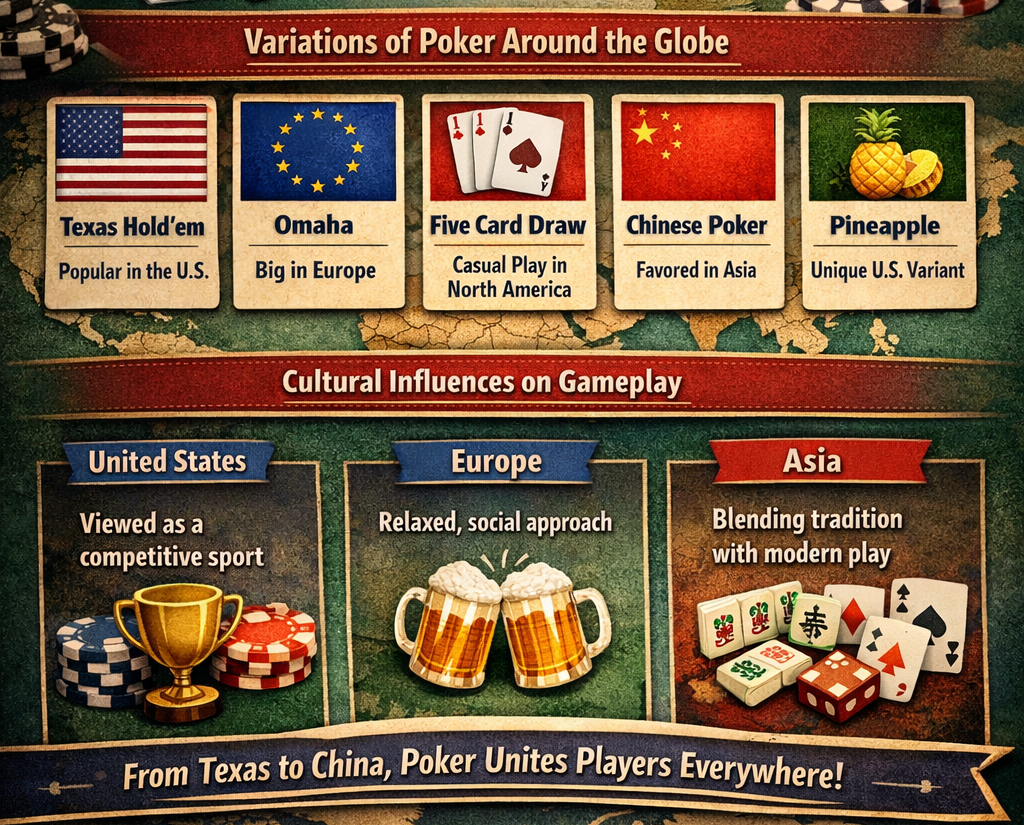
Different regions have their own preferred variations of poker, and the types available are often influenced by local traditions and gambling regulations. Some of the most notable variations that many of you may already be familiar with by now include:
- Texas Hold'em: This variant is immensely popular worldwide, especially in the United States. Players are dealt two hole cards and share five community cards, creating opportunities for strategic betting. Its popularity surged with televised tournaments and the World Series of Poker
- Omaha: This version, primarily played in Europe, has gained traction among serious players. Each player receives four hole cards, and they must use exactly two of them combined with three of the five community cards to build the strongest hand. The complexity leads to higher stakes and more varied gameplay
- Five Card Draw: Often played at home or in casual settings, this variation is simple and relies on skill and luck. Players are given five cards and can exchange some or all of them to improve their hand. This game is also huge in North America
- Chinese Poker: A favorite in Asia, particularly China, this particular variation involves organizing a 13-card hand into three different hands. Scoring and strategy differ significantly, making it intriguing for players looking for something outside traditional formats
- Pineapple: This lesser-known variant is popular in some parts of the U.S. Players receive three hole cards but must discard one before the community cards are revealed. It adds a layer of strategy not typically found in other games
Each of these variations presents distinct challenges and strategies, and they cater to the varying skill levels and preferences of all types of poker enthusiasts out there.
Cultural influences on gameplay
Not only do the rules and variations of poker change worldwide, but so too do the cultural attitudes towards gambling and playing. For example, in some cultures, playing poker is seen as a leisurely pastime, while in others, it carries a sense of camaraderie or competitive spirit.
- United States: Poker is often viewed as a competitive sport. The rise of tournaments and online platforms has made it mainstream, helping to attract both professional and casual players.
- Europe: European players may approach poker with a more relaxed attitude compared to their American counterparts. The European Poker Tour has gained a significant following, and poker is often associated with social gatherings. Players often focus more on the enjoyment side of the game and serious bragging rights rather than competition and the chance to win real money.
- Asia: In Asian countries, poker is gaining popularity, especially among the younger crowd. However, it’s still facing stiff competition from traditional card games like Mahjong. Variants like Chinese Poker align better with local gambling games, offering a unique blend of strategy and social interaction.
While many players enjoy the convenience of online poker, the community aspect of live play is irreplaceable. Events like the World Series of Poker or various international poker festivals still attract players who thrive on the social dynamics of the game.
Final thoughts
Understanding the diverse world of poker can massively enhance any player’s experience, whether you are a casual enthusiast or a strategic master. The variations and regional differences offer deeper insights into the game’s adaptability and appeal. It’s fascinating to see how cultural influences shape not only the rules and styles of play but also the perception of poker as a social gaming activity.
Exploring these differences can deepen your appreciation for the game and it might even inspire you to try a new variant or play in a different style. As poker continues to become more widely accessible around the world, it remains a testament to the universal love of a new challenge, of using strategy, and of forging new friendships across the tables, whether playing at home, at a land-based venue, or at legally permitted online casinos or dedicated poker sites.

