


There is plenty of overlap between them – they feel very different once the cards hit the table. One leans heavily on reading people. The other leans on reading numbers. Together, they show how flexible card strategy can be and how players can take lessons from one game and bring them into the other.
Shared Ground: Decision Making And Discipline
Poker involves people battling for pots with incomplete information. Blackjack involves players trying to beat the dealer with a clean set of rules. In both games, good players rely on discipline. They fold or stand when the situation calls for it. They may choose to push when the numbers lean in their favor. They also try to avoid wild decisions that break the flow of the game.
It is important to acknowledge the huge level of choice in terms of the games that people can play. When people play Blackjack games online at Cafe Casino, they have a choice of interfaces as well as forms of play. This means that the rules can vary slightly – the same is true of poker.
Players in both games often learn to control their pace. Poker teaches patience because some hands are not necessarily worth playing. Blackjack teaches timing because the wrong hit can swing the whole round. Managing risk is at the heart of both. Over time, players see that the first strategic step in each game is knowing when to do nothing. This is not a show-off skill. It is a calm one. And it is one of the strongest shared traits of poker and blackjack.
Another major link is understanding probabilities. Blackjack players study the averages behind each hand. They start by learning to avoid basic errors and learn why hitting on a twelve against a dealer’s two feels awkward yet makes sense. Poker players study the odds of hitting a flush on the river or the chance an opponent has a set. Both groups lean on numbers – they use them in different ways.
What Blackjack Teaches That Helps In Poker
Blackjack helps players develop fast decision-making because the game runs at a steady pace. There is no room for long pauses. There are no big speech plays. You see your cards. You see the dealer’s up card. You act. That rhythm sharpens instincts. It teaches players to trust the math and avoid emotional swings.
Those habits carry into poker. A player who understands blackjack often learns to stay level. They know how to keep each hand separate from the last. They work with clear logic instead of fear or excitement. In long poker sessions, this mindset helps because tilt can ruin a whole night. The steady flow of blackjack builds mental stamina that becomes valuable at any poker table.
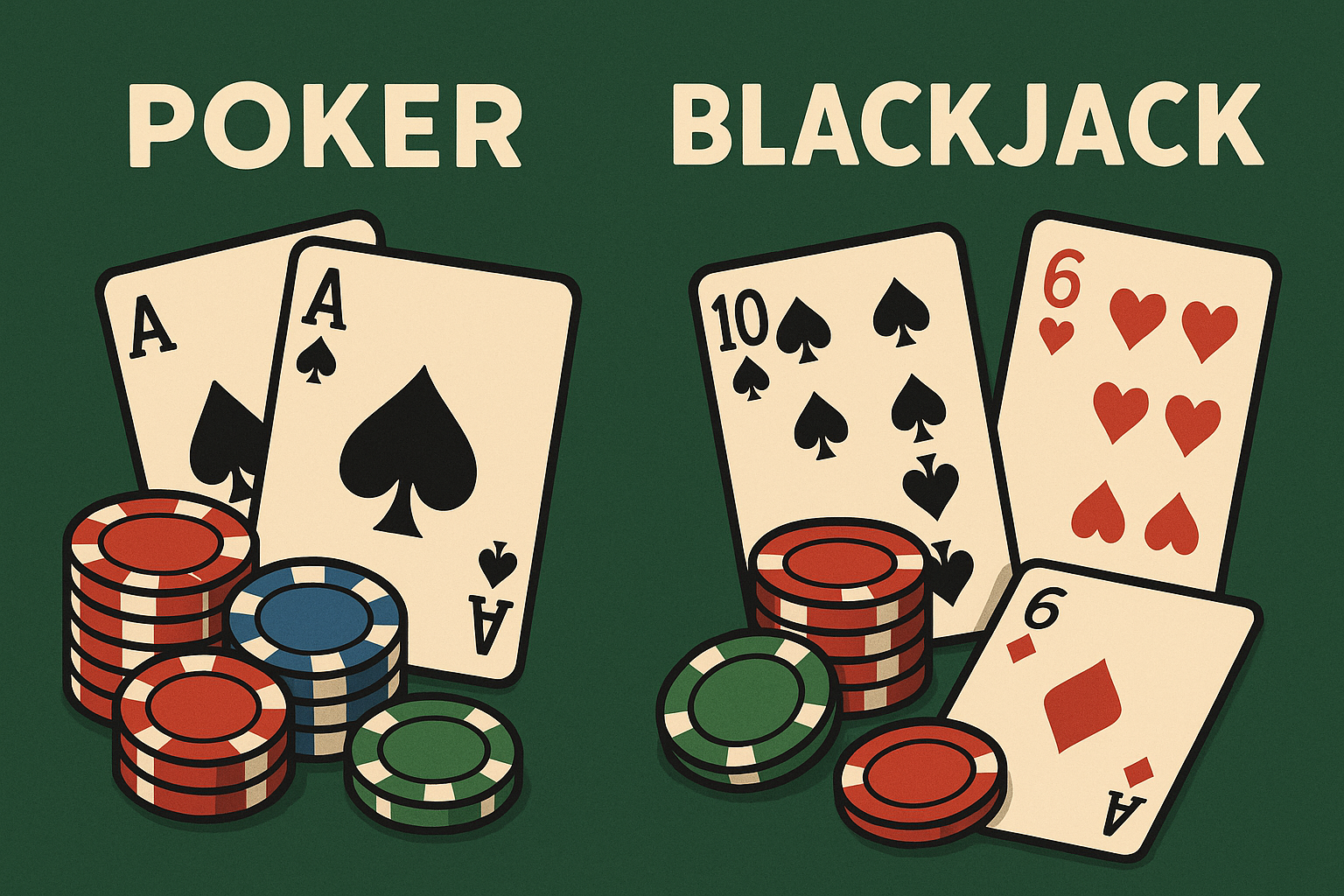
Blackjack also teaches basic bankroll management. Since the stakes move quickly, many players learn how to size their wagers. That idea moves into poker as well. Bankroll management is one of the key skills in poker, too.
What Poker Teaches That Helps In Blackjack
Poker offers its own lessons. Reading patterns is one of them. Players watch how others act in certain spots. They notice tendencies and track the rhythm of the table. That same skill can help in blackjack because the dealer follows strict rules. Knowing those patterns helps players better understand when the dealer is likely to bust or when a push seems likely.
Poker also teaches long-term thinking. A single hand does not define a session. Good poker players understand variance. They avoid chasing losses because they know that the next hand can shift the path of the game. There is always an element of randomness in these games. It is key to understand.
The Big Difference: Psychology And Bluffing
The sharpest difference between poker and blackjack is psychological play. Poker thrives on mind games. Bluffing adds a layer that changes every round. A player with a weak hand can still win if they convince others to fold. Everything from body language to bet sizing can influence the table. It is a unique part of poker that builds entire strategies on deception and pressure. Some people dive deep into mathematics and bluffing in the game.
Blackjack does not have this element. It is a straight match against the dealer with fixed rules. No bluff works against a dealer who must hit on sixteen. The path is clean and predictable. This makes the game more rigid than poker. It also means that psychology plays a smaller role. The focus shifts from reading people to reading cards and rules.
For anyone who enjoys card strategy, the two games form a natural pair. They show how different a game can feel when the rules change. The heart of decision-making stays the same. They keep evolving, yet the core remains strong.

