


From Facebook to Televised Cash Games
Chamath Palihapitiya is a name that resonates in business circles with venture capital and big tech stories, yet in poker, he transforms into "one of us"—a player who relishes the game where ego doesn't count and every decision has its cost. A Canadian born in Sri Lanka, he made his career in the US, working at Winamp and later Facebook, where he was instrumental in the company's growth before setting out on his own in 2011.
After leaving Facebook, he founded the investment firm Social Capital, becoming a prominent figure in the financial world. Poker suits him as naturally as boardrooms, which he sees as training for "real life," blending math, psychology, and the ability to endure variance without excuses.
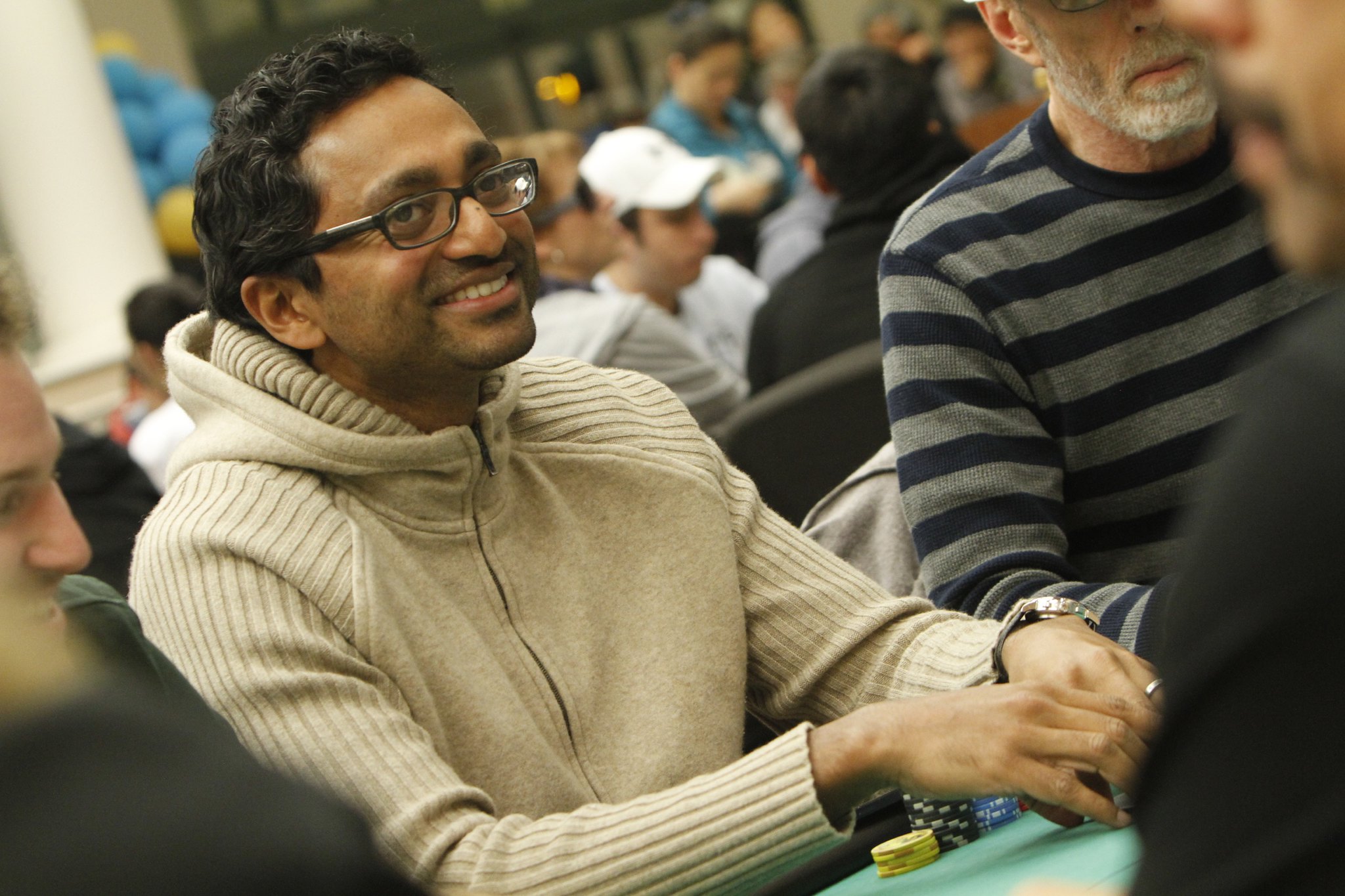
Palihapitiya has appeared on camera in high-stakes formats on PokerGO—like Poker After Dark or High Stakes Poker, where the blinds were $400/$800, and pressure was palpable in every pot. He's known to find his way into the priciest cash games. However, poker fans mostly notice him when he appears at the World Series of Poker, such as in 2023 when he participated in the $100,000 High Roller.
The Leak You Can't See on a Tracker
Chamath has experienced a paradox in life: at 34, he became a self-made billionaire but suffered from depression—not because he lacked anything but because he compared himself to others who had achieved before him, creating a personal value scoreboard in his mind.
Poker players know this mechanism well. Sometimes you're winning but feel worse than during losing streaks. All it takes is someone else having a better graph, a better screenshot, a larger success, and suddenly your life feels like a different league. Chamath puts it simply: "Money and happiness aren't directly linked. What can break you is the idea that it's never enough."
What parallel does he see between poker and investing? He sums it up with a question that should hang in every poker room and office: "Was my process correct?" This is the question that frees a player from excuses. Variance is a convenient narrative, just like "I was just unlucky." Sometimes it's true, but often it's a mask over a mistake we're reluctant to admit.
The process is tough because it's personal. It forces you to examine your decisions, emotions, and discipline. The outcome might be bad, but the process is the only aspect you can truly influence.
Edge is Not Talent - Edge is the Difference in Mistakes
When Chamath compares poker with life, he uses a simple formula: "Your mistakes minus my mistakes." It's not romantic or sugar-coated, but it's accurate. In any game of uncertainty, the edge often lies in making fewer mistakes than your opponent—or making them smaller, or at less costly moments. This message is tough for the ego, which wants to believe that we win because we're "better"—not because we're lucky.
The crucial aspect, if you want to control your mistakes, is that you have to make them first. Chamath returns to the idea that society teaches people to fear mistakes, pushing them towards conservatism. In poker, it's visible every day: a player fears losing and starts playing in a way that avoids feeling foolish, yet that's exactly when they lose their edge.
What Have We Lost with the Loss of Community?
When talking about happiness, Chamath surprisingly doesn't discuss performance but structures that once gave people a sense of belonging. He especially highlights religion, which offered a sense of inclusion, a sentiment that's increasingly rare today.
Religious traditions have gradually disintegrated, and social media accelerated it. The result is a world where everyone compares, feels undervalued, and has a reason to believe something is always missing. Here, the circle returns to poker: comparison isn't a personal flaw of one player. It's a habit of the times, and poker merely makes it visible.

If there's one takeaway for the poker audience from Chamath, it's this: "Stop proving your worth through someone else's scoreboards. Comparison is a leak that drains your energy, discipline, and joy from the process. Then you start making precisely those mistakes that cost you most."
The point of this episode isn't to say poker will "save you." Rather, it shows where you're deceiving yourself. And if you're lucky, it also reveals the best defense against comparison: a community with honesty and a process you can revisit, even when the outcome was unfavorable.
More from Beyond Poker:
Beyond Poker: Fedor Holz – When the Game Turns into Philosophy
Beyond Poker: Richard Branson – From Music to Space Flights and Poker on the Sea
Beyond Poker: Michael Phelps – When an Olympic Champion Discovers the Mind Game
Beyond Poker: Guy Laliberté and His Big Game – From Street Art to Cirque du Soleil
Beyond Poker: Bill Perkins – Taking Risks, Living Fully, and Playing Big
Beyond Poker: Andrew Lichtenberger – A Conscious Player in an Unconscious Game
Beyond Poker: The Story of Dan Smith – From Champion to Lifesaver
Beyond Poker: From High Stakes to High Impact – Igor Kurganov’s Mission to Save Lives
Beyond Poker: Liv Boeree – From WSOP Glory to AI Warnings
Sources – PGT, PokerNews, YouTube, HendonMob

