

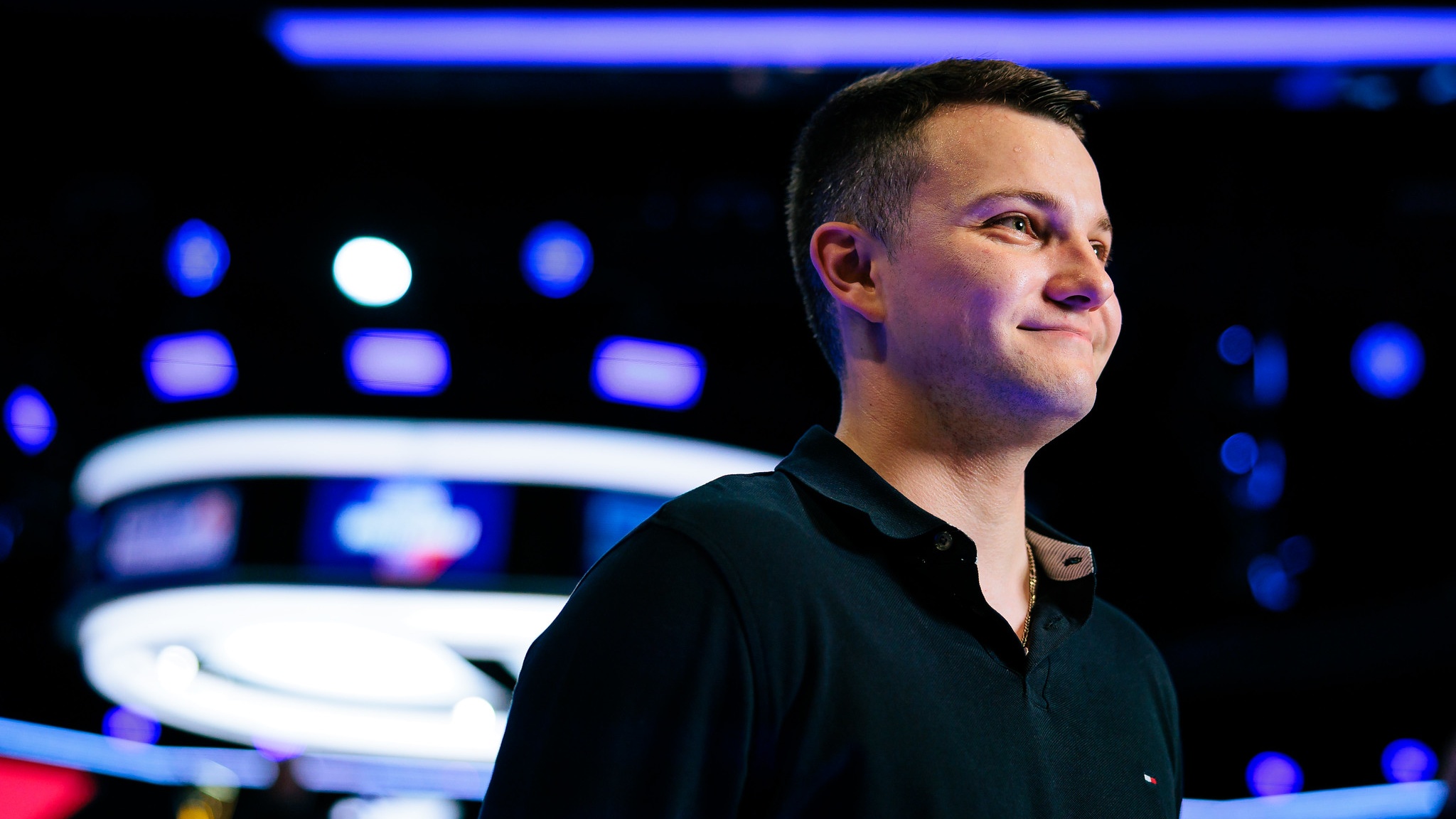
Alex Kulev is a name that has appeared on the high stakes scene relatively quickly. In the GTO Lab podcast with Jonathan Jaffe, he discusses the journey that took him from low-buy-in online tournaments to high roller fields in a short amount of time. However, the conversation isn’t about numbers or specific results, but rather what needs to change in a player's thinking for such a transition to make sense.
Progress Without Fixation on the Goal
Kulev openly admits that high stakes were never his initial objective. He didn’t think in terms of specific buy-ins or status. The driving force was the game itself and an obsession with improvement. This approach allowed him to progress without the pressure of expectations, which often hold players back even before they reach a higher level.
The message in the interview is clear: if the goal is only to "play higher," players will start making decisions that are disconnected from long-term growth. True progress comes when it's a byproduct of systematic work.
One of the main themes of the podcast is working with solvers. Kulev emphasizes that a solver for him never represented an authority to be followed blindly. It serves as a tool to understand patterns and decision-making logic, not a manual for specific situations. If a player cannot understand why a solver prefers certain lines, their study quickly turns into memorization without real application in the game. In the high stakes environment, where situations constantly change and opponents quickly adapt, such an approach is unsustainable.

Purposeful Aggression
Kulev is known for his aggressive style, but in the podcast, he explains that aggression for its own sake is not the goal. The context is crucial – against whom he is playing, what tendencies the opponent has, and how the decision will impact future streets or confrontations.
In the high roller arena, Kulev regularly faces the same players. The meta game, table image, and quick strategic adjustments become fundamentally important. The conversation demonstrates that technical knowledge without the ability to read field dynamics quickly loses value. Kulev warns that players who ignore the meta aspect of the game become predictable. In an environment where mistakes are penalized immediately, this is a significant problem.
Mental Preparation and Sustainability
A large part of the interview is dedicated to the mental aspect of the game. Kulev describes routines during breaks, physical exercise, consciously disconnecting from the game after a session, and the need to separate poker identity from personal life. Without this capacity, the intensity of high stakes spills over beyond the table, leading to burnout.
The conversation also reveals that the freedom poker offers is a double-edged sword. Without discipline in managing time, energy, and emotions, it quickly turns into a problem. The discussion provides a realistic view of transitioning from low stakes to high stakes without romanticizing it. It shows that what matters are not single victories or the speed of progression, but a shift in mindset, commitment to the process, and the ability to adapt long term.
More from the GTO Lab Podcast
Leon Sturm: Independent Thinking in the High Roller Scene
Orpen Kisacikoglu: Solvers Provide Quick Answers, But Take Away the Thinking Process
Alex Ponakovs: Why Independent Thinking is More Important Than Blindly Following Solvers
Nick Petrangelo: In $100k Events There Aren't Weak Players Anymore, So There's More Work to Do
Daniel Negreanu: Being at the Top of Poker for Years is Hard Work, Not Luck
Fedor Holz: I Used to Want Wins, Titles, and Money. Today I Want Happiness
Sources – Podcast GTO Lab, Flickr, PokerNews

